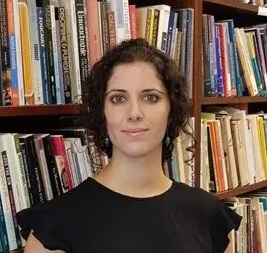
Walaa Alqaisiya is a Marie Curie Global Fellow affiliated with Ca’ Foscari University of Venice, Columbia University, and the London School of Economics. With a PhD in Human Geography from Durham University, her research bridges settler colonialism, decoloniality, gender, and ecology. In this interview, she reflects on Israel’s assault on Iran, the weaponization of starvation in Gaza, the targeting of journalists and humanitarian workers, and the suppression of Palestine scholarship in Western academia. Drawing on her forthcoming book Decolonial Queering in Palestine and her extensive work on everyday activism and aesthetics, Alqaisiya provides a sharp decolonial lens to understand the current conjuncture of imperial violence and Palestinian resistance.
The views expressed in this interview are those of the interviewee and do not necessarily reflect the positions of the Organization for Defending Victims of Violence (ODVV).
You can read the full interview below.
1. How do you assess Israel’s military assault on Iran in June 2025, which killed more than 1,000 civilians, within the broader framework of settler-colonial violence?
Israel’s attack on Iran that killed over 1,000 civilians represents the operational manifestation of “accumulation by waste[1]“—a political economy where systematic destruction becomes both economically profitable and politically necessary for maintaining US global dominance through its regional enforcer, Israel. This concept fundamentally reframes settler-colonial violence not as an unfortunate byproduct of capitalism but as its central organizing principle under monopoly finance conditions. Accumulation by waste operates through purposeful destruction that serves as both input and output in surplus value creation, making killing and wasting intrinsic characteristics of production under US-led financial capital accumulation. Every bomb dropped, every infrastructure target destroyed, and every life eliminated feeds into vast industrial networks spanning from Pentagon contractors to Wall Street investment firms, creating what amounts to a waste marketplace of imperialism. Wars create populations dependent on external aid, fragment social structures, and eliminate the material basis for independent political development—a strategy we have systematically witnessed across the region, from Iraq, Syria, Libya, Yemen and now Iran. This system cannot simply maintain existing exploitation; it requires continuous expansion of destruction to resolve overproduction crises while generating new markets for reconstruction, making the annihilation of human life not collateral damage but the fundamental requirement for imperial reproduction.
Understanding this economic logic becomes crucial when examining how the targeting of Iran emerges from the deeper settler colonial architecture that both the US and Israel[2] incarnate as states founded through the genocide of indigenous peoples and requiring the imperative of continued destruction and expansion to maintain themselves. The United States’ continental expansion through systematic elimination of Native American populations established the template for what would become global imperial dominance—a model that necessitates perpetual territorial acquisition and demographic replacement to sustain itself. Israel represents the contemporary perfection of this settler colonial logic, where European settler populations implement systematic elimination of Palestinian indigenous presence while expanding territorial control through religiously-justified conquest. Both states share the fundamental contradiction of settler colonialism: they cannot achieve stability or legitimacy without continuously expanding their eliminative and life-targeting projects, because any pause in expansion threatens to expose the artificiality of their founding claims and the unsustainability of their demographic engineering.
This shared settler colonial DNA explains why US support for Israeli genocide in Gaza and the killing of civilian life in Iran extends beyond strategic calculation to existential identification—both states recognize that the success of indigenous resistance anywhere threatens the legitimacy of settler colonial projects everywhere. The US empire’s global expansion represents the internationalization of continental settler colonialism, where the same logic of territorial acquisition, resource extraction, and demographic control gets applied globally through military bases, economic dependency, and systematic destabilization. Israel serves as the laboratory and enforcement mechanism for perfecting these techniques in the strategically crucial Arab and Iranian region, where vast oil wealth and potential for unified resistance pose the greatest threats to continued US imperial dominance.
The assault on Iran must therefore be understood within two interconnected dimensions. On one hand, the targeting of Iran cannot be separated from Netanyahu’s openly articulated vision of settler-colonial dominance through “Greater Israel,” which encompasses not merely Palestinian territories but extends to the rest of the region, from Syria to Iran. Tom Barrack, the US ambassador to Turkey who became Trump’s envoy to the wider Eastern Mediterranean and Caucasus, captured this expansionist vision: “In Israel’s mind, these lines that were created by Sykes-Picot are meaningless. They will go where they want, when they want, and do what they want to protect the Israelis and their borders.”[3] This assault occurs within the context of broader regional war aimed at redrawing the map of the entire Arab and Iranian region—what amounts to a new Sykes-Picot agreement for the twenty-first century. On the other hand, while this expansionist project requires the systematic elimination of any autonomous political formations capable of challenging Israeli-US regional dominance, Iran’s position as the leading force of the Axis of Resistance represents precisely such a challenge—demonstrating through concrete practice that independent regional development outside US imperial control remains viable.
2. Israel and the U.S. claim “self-defense” under Article 51 of the UN Charter. How does this interpretation align—or conflict—with international law and the lived realities of targeted populations?
The US-Israeli invocation of Article 51 represents a fundamental perversion of international law that operates through “selective humanization”—where certain populations are deemed worthy of protection while others are relegated outside the moral universe deserving of rights.[4] Self-defense provisions cannot legitimately apply to occupying colonial powers against the populations they occupy and colonize, yet this legal impossibility has been systematically normalized through decades of institutional manipulation.
This normalization operates through the structural corruption of international institutions, rendering these self-defense claims legally meaningless yet politically effective. The US has deployed its UN Security Council veto power over 45 times to protect Israel from accountability, representing slightly over half of all US vetoes since 1945. Of these vetoed resolutions, 33 pertained specifically to Israeli occupation of Palestinian territories or treatment of the Palestinian people.[5] Between 1982 and 1990 alone, the US used its veto to support Israel 21 times, while since 2001, the US has used its veto in support of Israel 14 times.
The mathematical absurdity of this arrangement becomes clear when examining recent voting patterns. When 153 of 193 UN member states voted for a ceasefire in December 2023, representing the overwhelming majority of the world’s population, a single US veto rendered this democratic will meaningless.[6] This reflects the fundamental structural flaw of the UN system: the imbalance of power between a small group of Western states and the majority of states and peoples worldwide. The Security Council’s veto mechanism allows individual Western nations to determine when the UN can halt war crimes, crimes against humanity, or genocide, effectively rendering the international legal system subservient to imperial interests[7]
Even when legal mechanisms function as designed, they prove meaningless without enforcement capacity backed by political will. While South Africa’s genocide case at the International Court of Justice resulted in provisional measures ordering Israel to prevent genocidal acts, Israel has publicly defied these orders and continued systematic destruction with complete impunity. Similarly, when the International Criminal Court issued arrest warrants for Netanyahu and former Defense Minister Yoav Gallant in November 2024, the international community failed to implement these measures, demonstrating how legal frameworks become irrelevant when Western powers provide diplomatic cover and military support to violating states.
The lived reality for targeted populations starkly exposes the hollowness of these legal claims. Palestinians face what UN experts characterize as genocide—with independent studies estimating over 80,000 direct deaths from violence by early 2025 and potentially over 370,000 total deaths including indirect casualties from destroyed infrastructure and healthcare systems.[8] UN Special Rapporteur Francesca Albanese, appointed by the UN Human Rights Council as an independent expert on the situation of human rights in the Palestinian territories occupied since 1967, has meticulously documented how Israel has engaged in genocide as colonial erasure, with the state apparatus deliberately targeting Palestinian society’s foundations.[9]
This represents what genocide scholars observe as fundamentally a Western genocide, where major European and North American powers actively support, shield diplomatically, and finance Israeli violence rather than failing to prevent it[10]. The weaponization of Article 51 thus serves not as legitimate legal justification but as ideological cover for what amounts to systematic elimination disguised as defensive action. International law becomes meaningless when the very powers designed to enforce it systematically corrupt its application, transforming legal institutions into instruments of imperial legitimation rather than universal justice.
3. Starvation has been weaponized in Gaza through siege, destruction of food systems, and attacks on people in food queues. How do you interpret this within the concept of “ecocidal violence”?
The weaponization of starvation in Gaza represents comprehensive ecocidal violence designed to render Palestinian territories permanently uninhabitable while serving as a laboratory for perfecting systematic destruction techniques. This extends far beyond siege tactics to encompass deliberate environmental warfare targeting the foundational conditions for Palestinian survival across multiple generations, revealing how ecological destruction functions as a core component of settler colonial elimination.
The historical roots of this ecocidal approach trace back to the earliest Zionist settlements in the 1880s, when settler-colonial institutions systematically acquired Palestinian agricultural land through legal mechanisms, economic pressure, and outright dispossession.[11] The Jewish National Fund’s policy of creating “inalienable” Jewish-only land, combined with labor exclusion practices prohibiting Palestinian employment on Jewish farms, established patterns of territorial control and economic marginalization that would later be institutionalized under Israeli state authority. This foundational strategy demonstrated how environmental control serves as both weapon and objective in settler colonial projects.
The transition from historical land seizure to contemporary starvation warfare became explicit through calculated nutritional control. In 2006, a senior adviser to Prime Minister Ehud Olmert articulated the underlying philosophy: “The idea is to put the Palestinians on a diet, but not to make them die of hunger.”[12] This statement reveals that nutritional restriction was already an established governmental tool, designed to maintain the population at survival levels while avoiding mass casualties that might provoke international intervention. Israeli health ministry officials subsequently developed detailed spreadsheets calculating minimum caloric requirements for Gaza’s population, factoring in estimated local food production to determine how much external food assistance would be permitted. These calculations resulted in allowing approximately 131 supply trucks per day, operating five days weekly, for a population exceeding two million people.[13]
The mathematical precision of this starvation regime demonstrates its systematic nature. COGAT (Coordinator of Government Activities in the Territories), Israel’s coordination office for territorial activities in occupied territories, has maintained this approach by establishing that Palestinians require an average minimum of 2,279 daily calories per person, equivalent to approximately 1.836 kilograms of food. However, Israeli government data reveals significant gaps between calculated requirements and actual allowances. During the March-June 2025 period, only 56,000 tonnes of food entered Gaza—representing less than 25 percent of the territory’s documented minimum needs. International humanitarian organizations currently estimate that 62,000 metric tonnes monthly are necessary to meet basic nutritional requirements for 2.1 million residents, yet even during peak allowance periods in 2025, only 60 percent of this baseline was permitted entry. [14]
Beyond controlling aid flows, Israeli forces have implemented comprehensive “agricultural annihilation” designed to permanently destroy Gaza’s capacity for food production and self-sufficiency.[15] Military operations have seized 29 percent of Gaza’s agricultural land through militarized buffer zones while systematically targeting the remaining farmland for destruction. Israeli forces have prohibited all fishing activities, destroyed farming equipment and greenhouses, and applied chemical herbicides to crops, rendering more than one-third of agricultural land unusable. By late 2024, military operations had damaged nearly 70 percent of farmland, while 95 percent of livestock had perished.
This agricultural devastation extends to the systematic destruction of Gaza’s water infrastructure, which forms the backbone of any sustainable food production system. Israeli forces have deliberately targeted water wells, irrigation systems, and water treatment facilities, creating conditions where even if agricultural land remained intact, cultivation would be impossible. The contamination and destruction of groundwater sources—Gaza’s primary water supply—ensures that any future attempts at agricultural recovery face insurmountable obstacles.
The targeting of agricultural infrastructure follows historical Zionist patterns of environmental warfare designed to render Palestinian territories uninhabitable. The systematic destruction of olive groves, the uprooting of fruit trees, and the deliberate contamination of agricultural soil through chemical agents demonstrates continuity with colonial practices of “making the desert bloom” for Jewish settlement while simultaneously making Palestinian land barren and unproductive.[16] This environmental warfare had been deployed against Palestinians already in 1948 through biological warfare tactics.[17] The ongoing military operations have accelerated this environmental destruction through systematic bulldozing of agricultural areas, destruction of seed banks and agricultural research facilities, and targeting of farming cooperatives and agricultural extension services. [18]
The deliberate nature of this ecocidal violence becomes evident through methodical targeting of specific agricultural infrastructure rather than collateral damage, demonstrating that food system annihilation constitutes a strategic objective rather than an unfortunate consequence of military operations. This comprehensive assault on both land and water resources reveals a calculated strategy to eliminate not just current food production, but to prevent any possibility of future agricultural self-sufficiency, ensuring that Palestinian territories remain permanently dependent on externally controlled assistance or face complete abandonment.
4. In your view, how does Israel’s systematic targeting of journalists and humanitarian workers relate to the mechanisms of colonial control and apartheid?
The systematic elimination of journalists and humanitarian workers represents “scholasticide and cultural genocide”—the deliberate destruction of a people’s intellectual and cultural foundations as integral to the broader genocidal campaign aimed at erasing Palestinians as a people.[19] This targeting operates through multiple interconnected mechanisms designed to eliminate documentation, erase collective memory, and prevent international solidarity while ensuring that Palestinian suffering remains invisible and unwitnessed.
The scale of journalist targeting reveals its strategic importance within the broader elimination project. Israel has killed more journalists since October 7 than died during the American Civil War, both World Wars, the Korean War, Vietnam War, Yugoslavia War, and Afghanistan War combined.[20] This methodical elimination extends beyond individual killings to encompass systematic destruction of media infrastructure, detention of Palestinian reporters, and targeting of international correspondents who document Israeli violations. The unprecedented nature of this assault demonstrates that silencing Palestinian voices constitutes a core military objective rather than collateral damage from combat operations.
This targeting forms part of a comprehensive strategy to decapitate Palestinian civil society and eliminate the foundations necessary for collective survival. Israel currently holds approximately 10,800 Palestinian political prisoners, representing a massive expansion of detention designed to systematically remove Palestinian intellectual, cultural, and political leadership.[21] The UN has documented systematic torture, sexual abuse, and dehumanizing treatment in Israeli detention facilities, with at least 48 Palestinian detainees dying in custody since October 7. This institutional violence serves to terrorize Palestinian society while eliminating those capable of organizing resistance or preserving cultural memory.
The transformation of humanitarian assistance into instruments of violence demonstrates how aid work itself becomes weaponized within the colonial framework. The Gaza Humanitarian Foundation, established in May 2025 despite its humanitarian branding, positioned distribution points within Israeli-controlled military zones, creating concentrated areas where desperate civilians become targets for sniper fire and drone attacks. Since beginning operations, these locations have generated over 670 fatalities and 4,000 injuries, forcing Palestinians to choose between starvation and exposure to lethal force while seeking food.[22]
Historical precedents reveal the systematic nature of this approach to humanitarian targeting. The February 2024 “flour massacre” exemplifies this strategy: Israeli forces opened fire on thousands of Palestinians waiting for grain deliveries, killing at least 112 people and wounding 760 others, with survivors covered in blood and flour while ambulances were prevented from reaching the wounded. [23]Aerial food drops have proven similarly lethal—packages dropped without parachutes have killed Palestinians through impact, while those dropped into coastal waters have caused drowning deaths as people attempted recovery.[24]
International humanitarian workers face systematic targeting that suggests coordinated rather than accidental attacks. The targeted killing of World Central Kitchen personnel despite advance coordination with Israeli military authorities demonstrates how humanitarian coordination mechanisms become instruments for facilitating rather than preventing violence against aid workers.[25] Throughout the first 21 months of conflict, humanitarian convoys faced repeated attacks while 104 days of aerial drops provided nutrition equivalent to only four days of food for Gaza’s population, revealing how humanitarian theater substitutes for meaningful assistance.
This systematic targeting serves the broader objective of what UN experts characterize as genocide—the methodical destruction of Palestinian society to ensure Palestinians have no future in Gaza or anywhere in historical Palestine.[26] By eliminating those who document, preserve, and transmit Palestinian culture, history, and current reality, Israel aims to complete what amounts to comprehensive erasure disguised as military necessity. The targeting of journalists and humanitarian workers thus represents not isolated war crimes but integral components of a coordinated elimination campaign designed to render Palestinian resistance invisible while ensuring that their systematic destruction proceeds without witness or accountability.
5. Many lawyers describe starvation as a war crime under the Rome Statute, are legal frameworks sufficient, or do we need alternative forms of accountability?
Existing legal frameworks remain fundamentally inadequate because they operate within the same imperial system that enables the violations they purport to address. Legal instruments without political will capable of enforcing meaningful change serve primarily as legitimation mechanisms for the very system they claim to regulate, creating an illusion of accountability while enabling systematic violence to continue with complete impunity.
The Rome Statute’s explicit criminalization of starvation as a method of warfare represents a clear legal framework that should directly apply to Gaza’s situation, where Israeli forces have systematically weaponized hunger against Palestinian civilians. However, the Statute’s enforcement mechanisms remain captured by the same imperial powers that enable these violations. The International Criminal Court’s limited jurisdiction and dependence on state cooperation renders it ineffective when major powers systematically undermine its authority through diplomatic pressure, funding withdrawal, and direct sanctions against court personnel. When the US places UN Special Rapporteur Francesca Albanese under sanctions for documenting Israeli genocidal conduct, it demonstrates how legal accountability mechanisms become targets themselves when they threaten imperial interests.
International law’s colonial foundations become evident in how legal frameworks emerged from the same European imperial projects that created Israel as a settler colony. The Westphalian system and subsequent legal instruments were designed to legitimize European territorial acquisitions while criminalizing resistance by colonized peoples. Contemporary international law retains colonial influences through the selective application of concepts like sovereignty and self-determination, which have historically favored established states while inconsistently recognizing indigenous rights to liberation and self-governance. The Rome Statute’s framework systematically criminalizes tactics of armed resistance while legitimizing the ‘lawful’ methods of warfare available to technologically superior imperial forces. Despite the Statute’s formal criminalization of many forms of state violence including genocide, crimes against humanity, and war crimes, its enforcement mechanisms ensure that liberation movements are branded as inherently ‘unlawful’ while devastating state violence conducted through conventional military means receives legal protection. This creates legal architecture where the law’s formal prohibitions against state violence become meaningless through selective enforcement, making the systematic bias toward imperial power a structural feature rather than an enforcement failure of the international legal order.
The structural failure of international law becomes evident through its weaponization by dominant powers. This manipulation operates through multiple mechanisms, from Security Council veto abuse that consistently shields Israeli violations from accountability, to the broader pattern of vetoes that renders democratic will meaningless within international forums. The mathematical reality is stark: when the overwhelming majority of the world’s nations and populations support basic measures like ceasefires or accountability mechanisms, yet Western powers can unilaterally override these collective decisions, transforming international law into an instrument of imperial privilege rather than universal justice.
As I mentioned earlier, despite over 900 UN resolutions regarding Palestinian rights over 75 years, Israel has rejected compliance with any of them, with US vetoes consistently preventing accountability at the UN Security Council. Even when legal mechanisms function as designed, they prove meaningless without enforcement mechanisms backed by political will. While South Africa’s genocide case at the International Court of Justice resulted in provisional measures ordering Israel to prevent genocidal acts, Israel has publicly defied these orders and continued systematic destruction with complete impunity. Similarly, when the International Criminal Court issued arrest warrants for Netanyahu and former Defense Minister Yoav Gallant in November 2024, the international community failed to implement these measures, demonstrating how legal frameworks become theater when Western powers provide diplomatic cover and military support to violating states.
The corruption of the Rome Statute also happens when neutral international bodies become into intelligence-gathering operations serving imperial powers. Historical precedents reveal this pattern across multiple countries. The New York Times reported in 1999 that US intelligence agencies had systematically infiltrated UN weapons inspection teams to conduct espionage operations against Iraq, with American officials confirming that the CIA used the cover of UN weapons inspectors to gather intelligence on Iraqi military installations and government communications.[27] This infiltration enabled the US to gather targeting information for subsequent military strikes while maintaining the international legitimacy that UN authorization provided, transforming ostensibly neutral humanitarian and disarmament missions into covert intelligence operations serving US strategic objectives. The same pattern emerged in the recent bombing of Yemen, where AnsarAllah accused UN workers in Sanaa to provide the coordinates for the Israeli assassination of the Yemeni PM and eight other ministers. The recent leak of Israeli document by Iran has also shown how the IAEA worked closely with and under pressure by Zionist forces. These are not details of history, rather they show how the same institutions used to ‘negotiate’ or ‘mediate’ international problems are weaponized against countries of the Global South.
Alternative accountability requires fundamentally restructuring the global institutional architecture around principles of genuine multipolarity and peaceful coexistence rather than imperial dominance. This necessitates moving beyond the current US-led order of chaos and violence toward a world order based on respect for autonomy and sovereignty of majority of the world’s nations. These principles directly threaten the US model of maintaining control through systematic destabilization, revealing why the current moment represents not merely policy differences but fundamentally opposed visions of global organization.
The rehabilitation of international legal systems must occur within new global parameters that respect and commit to peace and shared humanity rather than imperial privilege. This transformation requires recognizing that the current transitional crisis—where “the old world is dying, and the new world struggles to be born”—creates unprecedented possibilities for systematic transformation beyond the logic of organized destruction that has characterized Western imperial dominance. Gaza has become the litmus test for any socio-political formation claiming to represent alternative world order. Every nation, movement, and leader advocating for multipolarity, peaceful coexistence, or South-South cooperation faces a fundamental choice: will they allow the normalization of genocide to proceed unchallenged, or will they recognize that Gaza represents the frontline in the battle for humanity’s future? China’s Belt and Road Initiative, Russia’s resistance to Western hegemony, Iran’s assertion of sovereignty, the African Union’s pursuit of continental integration—all these alternative formations ultimately depend on establishing a world where construction prevails over destruction. But such a world cannot emerge while Gaza burns, because the logic that permits Palestinian genocide will inevitably expand to target any formation that challenges imperial dominance. No alternative world order that remains silent in the face of Palestinian genocide deserves to inherit the earth.
6. Your work on Palestine and the Western Academy reveals the level of suppression in western educational infrastructures when it comes to the question of Palestine. Can you elaborate on this especially in light of the student led movement for Palestine and its increasing suppression within the US and European academic institutions?
The suppression of Palestine scholarship within Western educational institutions represents a systematic campaign of epistemic violence that intensified dramatically long before the current Gaza genocide, revealing the structural embeddedness of Western academia within imperial knowledge production. The forthcoming edited volume, with Dr Nicola Perugini, Palestine and the Western Academy: Fighting the Exception, Defending Epistemic Justice, emerged from witnessing and experiencing firsthand the unprecedented levels of repression targeting scholars whose work challenges Zionist narratives and supports Palestinian liberation.
This suppression operates through sophisticated mechanisms of institutional control that transform universities into “settler colonial outposts”—spaces that extend Israeli colonial sovereignty beyond the borders of the Zionist state itself.[28] The targeting follows predictable patterns: internal complaints by Zionist student organizations, leaks to pro-Israel media, defamation campaigns launched on social media by advocacy groups, and systematic surveillance of scholars’ social media accounts to manufacture accusations that become the basis for cancellation campaigns.[29] My own experience illustrates this dynamic—in May 2022, I was disinvited from the Spring Curatorial Program at Vienna’s Academy of Fine Arts after pressure from the Austrian Union of Jewish Students and KESHET Austria, who labeled my work on as “antisemitic” simply for describing Israeli settler colonialism.[30]
The historical development of this repressive apparatus traces back to the post-9/11 period, when Palestinian armed resistance became systematically reframed as terrorism, providing justification for applying counter-terrorism narratives to suppress Palestine scholarship across Western institutions. The 2016 International Holocaust Remembrance Alliance (IHRA) definition of antisemitism represents the culmination of this strategy, functioning as a powerful tool of epistemic repression that conflates Jewishness with Israeliness to shield the Zionist regime from criticism. The IHRA definition transforms Palestine into an “exceptional question[31]” requiring exceptional means of repression, effectively criminalizing scholarly analysis that compares Israeli practices to other settler colonial or apartheid systems.
The Gaza genocide has exponentially intensified this repression, revealing the true extent of Western academia’s complicity in imperial violence. Universities across the United States, Europe, and other Western countries have deployed unprecedented measures against student and faculty Palestine solidarity: mass arrests of student protesters, revocation of international student visas, suspension of tenured faculty, and placement of entire academic departments under federal receivership. [32] The transformation of university campuses into militarized zones during student encampments demonstrates how academic institutions have become direct extensions of state violence, with university administrators calling police forces to brutally suppress democratic expressions of anti-genocide sentiment.
What emerges from documenting these cases is not merely a catalog of institutional failures but evidence of Western academia’s foundational role in what Edward Said identified as the “denial of the right to narrate”—the systematic intellectual activity sustaining ideological structures that obscure Palestinian colonial reality.[33] Universities function as key sites for manufacturing what we call, in our introduction to the volume, the “accumulation of Zionist epistemic power,[34]” where knowledge production serves imperial rather than humanistic objectives. The silencing of Palestinian voices and their allies operates through multiple interconnected processes: bureaucratic harassment disguised as due process, weaponization of campus safety discourse against anti-Zionist expression, and systematic exclusion of Palestinian perspectives from curricula and academic programming.
However, the volume’s significance extends beyond documentation to pedagogical transformation. Drawing inspiration from Palestinian organic intellectuals like the martyred professor Rifaat Alareer, the political prisoner and educator Khalida Jarrar, and the revolutionary thinker Basil Al-Araj, we emphasize how Palestinian resistance embodies what “epistemic disobedience”—the refusal to accept colonial frameworks for understanding reality and the insistence on developing indigenous, liberatory forms of knowledge production.[35] Alareer’s commitment to storytelling as both “an end and a means” for Palestinian survival, Jarrar’s transformation of Israeli prisons into spaces of educational resistance, and Al-Araj’s rejection of “sofa-bound intellectualism” in favor of engaged struggle provide models for scholars worldwide seeking to delink from imperial knowledge systems. The pedagogy of disobedience that Palestine offers challenges Western academics to move toward scholarship based upon the premise that human beings make their own history. This requires constantly interrogating whether our intellectual activity serves Palestinian self-determination and liberation or reinforces the colonial structures that deny Palestinian humanity. Palestinian epistemic disobedience demonstrates that knowledge production can function as a form of resistance when rooted in the concrete struggles of the oppressed rather than abstract theoretical frameworks that serve imperial interests.
The student encampment movements that emerged across Western universities following October 7 represent the materialization of this pedagogical approach, creating spaces where Palestinian liberation becomes the organizing principle for intellectual work rather than an abstract subject of academic study. These movements challenge what contributors to our volume identify as dominant scholarly responses to genocide—silence, obfuscation, and appeals to “complexity” that obscure the fundamental reality of colonial elimination.[36] Instead, they demonstrate how academic spaces can become sites of genuine solidarity and transformative education when freed from institutional mechanisms of co-optation and imperial complicity.
The Western academy’s structural embeddedness in imperial epistemic violence makes reform insufficient—what is required is fundamental transformation of how knowledge gets produced, validated, and disseminated. Palestine’s struggle for liberation provides both the urgency and the methodology for this transformation, showing how intellectual work can serve emancipatory rather than colonial objectives when anchored in the concrete struggles of those fighting for their survival and dignity against overwhelming odds.
7. On August 12, 2025, the UN Secretary-General sent a letter to Israel’s UN ambassador expressing grave concern over credible information about patterns of conflict-related sexual violence by Israeli military and security forces against Palestinian detainees. What is your view on these patterns of sexual violence, and what forms of accountability or resistance do you see as most urgent?
The UN Secretary-General’s August 2025 letter regarding credible reports of conflict-related sexual violence by Israeli forces against Palestinian detainees reveals the systematic nature of what I term the “occupation of gender by genocidal means”—the weaponization of gendered and sexual violence as integral components of settler colonial elimination rather than aberrant byproducts of conflict.[37]
Sexual violence within the Israeli detention system operates through a dual process that simultaneously strips Palestinians of recognition as human subjects deserving protection while using sexualized violence to reinforce colonial hierarchies of humanity. The UN documentation of systematic torture, sexual abuse, and dehumanizing treatment, with at least 48 Palestinian detainees dying in custody since October 7, demonstrates how sexual violence functions as a deliberate strategy intended to humiliate and strip Palestinians of any bodily rights or human dignity.
This systematic sexual violence cannot be understood through liberal frameworks that treat such violations as exceptional departures from civilized conduct. Instead, it represents the deliberate implementation of colonial thinking that has historically portrayed Palestinians as savage, animal-like beings who exist outside the community of people deserving protection.1 When Israeli officials describe Palestinians as “human animals” while simultaneously perpetrating sexual violence against them, they reveal how sexual violence serves to reinforce the fundamental divide between who counts as human and who does not—a divide that underlies the entire Zionist project.
This dehumanization is not accidental but systematic. It builds on centuries of colonial practices where European powers justified violence against colonized peoples by portraying them as less than human. In the Palestinian context, this same logic allows Israeli forces to commit acts of sexual violence that would be universally condemned if committed against populations deemed fully human. The sexual abuse documented by the UN serves to reinforce the message that Palestinians exist outside the boundaries of moral consideration and legal protection. The patterns of sexual violence documented by the UN operate within the broader framework of an economic system where systematic destruction—including the destruction of Palestinian bodies through sexualized torture—becomes both economically profitable and politically necessary for maintaining Zionist dominance. Under this system, violence and destruction are not unfortunate side effects but deliberate tools that serve settler-colonial interests while generating profits for weapons manufacturers, surveillance companies, and prison facilities. Sexual violence against Palestinian detainees serves multiple functions within this system: it terrorizes Palestinian society, eliminates potential resistance leadership, and demonstrates the total vulnerability of Palestinian life to Israeli control. This violence operates as part of a calculated strategy where the systematic breaking down of Palestinian bodies and spirits becomes a method of political control that serves both Israeli settler colonial objectives and broader US imperial interests in the region.The deliberate nature of this violence reveals how it functions not as isolated criminal acts but as systematic components of a colonial project designed to make Palestinian life unbearable. Every act of sexual violence against Palestinian prisoners serves the dual purpose of individual degradation and collective intimidation, reinforcing the message that Palestinian resistance will be met with the most extreme forms of dehumanizing punishment.
World-wide anti-Zionist and anti-imperialist mobilization offers the most urgent framework for accountability because it recognizes that sexual violence against Palestinians operates not as isolated criminal acts but as systematic components of Zionism and imperialism. Liberal human rights frameworks that focus on individual accountability while ignoring structural power relations prove fundamentally inadequate when confronting violence that emerges from the very foundations of settler colonial and imperial domination. The most urgent forms of accountability must therefore address both immediate protection of Palestinian detainees and the systematic dismantling of the imperial architecture that enables such violence. This requires recognizing that sexual violence against Palestinians follows established patterns of US imperial violence, most notably the systematic sexual abuse perpetrated by American forces against Iraqi prisoners at Abu Ghraib and other detention facilities during the Iraq occupation. The connection is not coincidental but foundational: Israel functions as America’s “regional enforcer” implementing techniques of domination that the US has refined through decades of interventions across the Arab world.[38] The same imperial powers that justified the destruction of Iraq by claiming to liberate Iraqi women from patriarchal oppression simultaneously created the conditions for systematic sexual violence against Iraqi men, women, and children in US-run prisons. Today, this same logic allows Israeli forces to perpetrate sexual violence against Palestinian detainees while Western officials claim to defend “values of liberal societies, of LGBTQ” and women’s rights[39]. This reveals the fundamental hypocrisy of imperial feminism: the same forces that claim to liberate Arab and Muslim women from the supposed violence of “Islam-land” are the ones systematically perpetrating sexual violence against these very populations. The techniques of sexual humiliation, torture, and dehumanization documented in Palestinian detention facilities directly mirror those developed by US forces in Iraq, Afghanistan, and Guantanamo Bay. Israeli interrogators and prison guards have been trained by US military and intelligence personnel, creating a direct transfer of knowledge about how to use sexual violence as a tool of political control. This demonstrates how sexual violence against Palestinians serves the broader US-Israeli project of regional domination, ensuring that no Arab population can resist imperial control without facing the most extreme forms of dehumanizing punishment.
Effective resistance must operate through mass mobilization on both regional and global levels to raise awareness and build concrete opposition to Zionism and imperialism. This approach centers the liberation of colonized peoples while shattering any illusions about the “feminism” and “sexual liberation” that the US and Zionism claim to champion. The reality is that the same imperial forces that present themselves as defenders of women’s rights and LGBTQ liberation are the ones systematically perpetrating sexual violence against Palestinian women, men, and children in detention facilities. Mass mobilization must expose how sexual violence against Palestinian detainees connects to broader patterns of imperial violence while building concrete pressure for accountability. This requires coordinated campaigns that link Palestinian liberation struggles with other anti-imperialist movements both regionally and worldwide, creating the political pressure necessary to challenge Israeli and US impunity. Such mobilization must operate across multiple fronts: legal advocacy for Palestinian prisoners, documentation and exposure of systematic abuses, economic pressure through boycotts and divestment, and sustained political organizing that centers Palestinian voices and demands. The transformation of humanitarian assistance into sites of violence, the systematic targeting of Palestinian intellectual and cultural leadership, and the systematic perpetration of sexual violence against detainees all represent interconnected strategies designed to eliminate Palestinians as a people. Only mass mobilization that connects these various forms of violence within a comprehensive anti-imperialist confrontation can provide the organizational capacity necessary for challenging these interconnected systems of domination while supporting the emergence of liberatory alternatives rooted in Palestinian self-determination and revolutionary transformation.
[1] See Capasso, M. and Kadri, Ali: https://www.tandfonline.com/doi/full/10.1080/19436149.2023.2176943
[2] See Alqaisiya, W. https://www.radicalphilosophy.com/article/the-urgency-of-anti-imperialist-feminism
[3] see https://www.middleeasteye.net/news/israel-sees-sykes-picot-borders-us-envoy-tom-barrack
[4] https://www.radicalphilosophy.com/article/the-urgency-of-anti-imperialist-feminism
[5] https://globalaffairs.org/commentary-and-analysis/blogs/how-us-has-used-its-power-un-support-israel-decades
[6] https://www.un.org/unispal/document/us-vetoes-resolution-on-gaza-which-called-for-immediate-humanitarian-ceasefire-dec8-2023/
[7] https://www.openglobalrights.org/failures-un-israel-palestine-conflict/
[8] https://www.tandfonline.com/doi/full/10.1080/19436149.2025.2538359?src=exp-la
[9] https://www.ohchr.org/en/press-releases/2025/03/tragedy-foretold-and-stain-our-collective-humanity-special-rapporteur-warns
[10] https://genocidescholars.org/wp-content/uploads/2025/08/IAGS-Resolution-on-Gaza-FINAL.pd
[11] https://www.palestine-studies.org/en/node/1649448
[12] https://www.theguardian.com/world/2025/jul/31/the-mathematics-of-starvation-how-israel-caused-a-famine-in-gaza
[13] https://www.palestine-studies.org/en/node/1657646
[14] https://www.theguardian.com/world/2025/jul/31/the-mathematics-of-starvation-how-israel-caused-a-famine-in-gaza
[15] https://www.palestine-studies.org/en/node/1657646
[16] https://www.tandfonline.com/doi/full/10.1080/14649365.2023.2268583
[17] https://www.tandfonline.com/doi/full/10.1080/00263206.2022.2122448
[18] https://www.albustanseeds.org/news/protectingseedheritage-c4lc7-a2j3l-lz4wl-ym9cd-bcrdy-h3wwp-2gs9a-jz9k5
[19] https://www.tandfonline.com/doi/full/10.1080/19436149.2024.2384009
[20] https://watson.brown.edu/costsofwar/papers/2025/Journalists
[22] https://www.palestine-studies.org/en/node/1657646
[23] https://www.ohchr.org/en/press-releases/2024/03/un-experts-condemn-flour-massacre-urge-israel-end-campaign-starvation-gaza
[24]https://www.palestine-studies.org/en/node/1657646
[25] https://www.theguardian.com/world/2025/jul/31/the-mathematics-of-starvation-how-israel-caused-a-famine-in-gaza
[26] https://www.ohchr.org/en/press-releases/2025/08/un-experts-appalled-relentless-israeli-attacks-gazas-healthcare-system
[27] https://www.nytimes.com/1999/01/07/world/us-spied-on-iraq-under-un-cover-officials-now-say.html
[28] https://www.tandfonline.com/doi/full/10.1080/19436149.2024.2348373
[29] https://www.tandfonline.com/doi/full/10.1080/19436149.2024.2384009
[30] https://elsc.support/cases/palestinian-academic-challenged-austrian-institutions-censorship
[31] https://www.tandfonline.com/toc/ccri20/33/3
[32] https://apnews.com/article/f1-visa-international-college-student-trump-9d4d900d328a0c205503c1178e70f1d5
[33] Said, Edward. “Permission to Narrate.” Journal of Palestine Studies 13, no. 3 (1984): 27-48
[34] https://www.routledge.com/Palestine-and-the-Western-Academe-Fighting-the-Exception-Defending-Epistemic-Justice/Alqaisiya-Perugini/p/book/9781041004912?srsltid=AfmBOoqNyYCwSXuiEDY9-u2v7EaxZKfvxSdRk30ehZAbl_YMJ4rTXyBe
[35] https://www.routledge.com/Palestine-and-the-Western-Academe-Fighting-the-Exception-Defending-Epistemic-Justice/Alqaisiya-Perugini/p/book/9781041004912
[36] https://www.routledge.com/Palestine-and-the-Western-Academe-Fighting-the-Exception-Defending-Epistemic-Justice/Alqaisiya-Perugini/p/book/9781041004912 b
[37] https://www.radicalphilosophy.com/article/the-urgency-of-anti-imperialist-feminism
[38] https://www.anti-imperialists.com/blog/al-aqsa-flood-full-spectrum
[39] https://www.radicalphilosophy.com/article/the-urgency-of-anti-imperialist-feminism