ODVV’s online conversation with Professor Michael Lynk, former UN Special Rapporteur on the occupied Palestinian territory
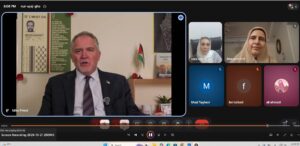
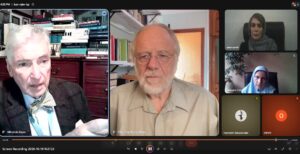
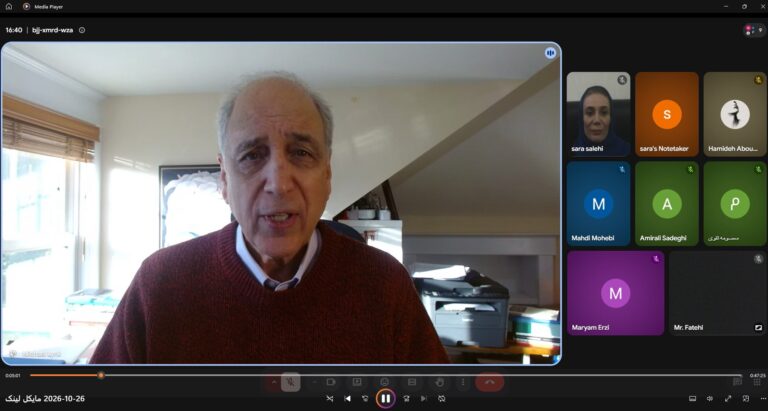
On Monday, 26 October 2026, the Organization for Defending Victims of Violence (ODVV), held an online conversation with Professor Michael Lynk titled “Civilian Protection and Accountability under International Law: The Cases of Palestine and Iran.” The discussion addressed the protection of civilians during armed conflict, the attack on a school in southern Iran, avenues for international criminal accountability, U.S. measures against the International Criminal Court (ICC), and the rights and freedom of Palestinians.
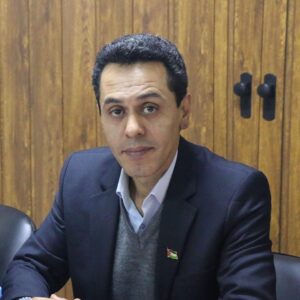
Michael Lynk, a Canadian legal scholar and Professor Emeritus of Law at Western University, served as the UN Special Rapporteur on the situation of human rights in the Palestinian territories occupied since 1967, from 2016 to 2022. He has many years of experience in international human rights law, the protection of civilians, and questions of accountability. The views expressed by the speaker are his own and do not necessarily reflect the official position of the Organization for Defending Victims of Violence.
Civilian protection and the failure of accountability
Lynk traced the development of modern international law to the aftermath of the Second World War, the creation of the United Nations and the Nuremberg trials. He identified the 1949 Geneva Conventions as central to the rules governing war and occupation, particularly the distinction between combatants and civilians and the protection of people living under occupation. He stressed that civilians must be kept out of harm’s way and that the development of new technologies, including drones and artificial intelligence, required continued attention to that distinction.
Lynk described what was happening in Gaza through Israel’s occupation and war as genocide, referring to findings by the UN Human Rights Council’s Commission of Inquiry and the current UN Special Rapporteur. He said there was also strong evidence of war crimes and crimes against humanity in Israel’s conduct of the war. He criticized the deepening occupation and annexation in the West Bank and East Jerusalem, describing an intention to drive Palestinians from their homeland and create a racially segregated area of the West Bank for Israeli Jews only.
He connected these protections to the wars that Israel and the United States had, in his words, “inflicted upon Iran,” including the bombing of the children’s school in Minab, southern Iran, at the end of February 2026. He distinguished the reasons for launching a war from the way it was conducted: whether a war was considered just or unjust, violations of the laws of war and occupation raised the question of accountability. He lamented the absence or inadequacy of accountability for war crimes, crimes against humanity and genocide, and stressed the need to punish those responsible so that such crimes could not be committed with impunity.
Lynk warned that leaving accountability to politics rather than law created a dangerous grey zone. In his assessment, courts—including the ICC, the International Court of Justice and national courts—could not by themselves secure effective enforcement without decisive political action. He criticized the permanent veto held by five members of the Security Council, which allowed them to block action on threats to international peace and security without having to justify its use. Concerted action by an alliance of like-minded countries was another possibility, he said, but occurred too rarely.
Despite these obstacles, Lynk emphasized the moral force of international law. He described the Israeli occupation as unlawful and Israeli settlements as war crimes, and criticized Israel’s annexation of East Jerusalem and parts of the West Bank and its efforts to annex the rest of the West Bank and Gaza. Explaining that such actions were unjust and illegal, he said, could influence public opinion and support campaigns for justice in Palestine, Iran and elsewhere. He recalled that his work as Special Rapporteur had focused on protecting civilians’ lives, homes, well-being and dignity.
He outlined international criminal law, international humanitarian law and international human rights law as complementary protections. These addressed responsibility for war crimes, crimes against humanity, genocide and aggression; the laws of war and occupation; and the rights and freedoms of all people. He referred to the Geneva Conventions, the Universal Declaration of Human Rights, the two 1966 Covenants and treaties protecting women, children, persons with disabilities and workers. These rights, he stressed, belonged to people simply because they were human and could be invoked in relation to their own governments and other states.
International criminal justice and accountability for attacks against Iran
The first question concerned possible legal avenues for pursuing accountability for alleged crimes committed by Israeli officials and military commanders on Iranian territory. It specifically raised national courts exercising universal jurisdiction, UN mechanisms and other international judicial avenues, as well as the legal and practical obstacles to their use.
In response, Lynk traced the development of international criminal justice from Nuremberg through the tribunals for the former Yugoslavia and Rwanda to the 1998 Rome Statute and the establishment of the ICC in 2002. He discussed the Court’s jurisdictional limitations in relation to countries outside the Rome Statute, including Iran and the United States, and referred to Security Council referral as an avenue for bringing such situations before the Court.
U.S. sanctions against the ICC and the protection of judicial independence
Lynk criticized what he described as the Trump administration’s concerted effort to destroy the ICC. He linked U.S. sanctions against judges and prosecutors to investigations concerning American military personnel in Afghanistan and proceedings concerning Gaza, including arrest warrants for Benjamin Netanyahu and former defence minister Yoav Gallant. He also referred to the Court’s action concerning Hamas leaders. According to Lynk, U.S. sanctions had expanded in 2025, and the administration had more recently threatened measures against the entire Court to bring its operations to an end.
He described the impact on targeted individuals as “financial death”: loss of access to banking, payment cards, airline tickets, accommodation and even meals, owing to the United States’ central role in the international financial system. He said there were few practical avenues for overturning these sanctions, apart from occasional litigation in U.S. courts. He called the U.S. approach one of the greatest threats facing modern international criminal law and international law more broadly.
He maintained that the ICC was not a threat to the United States, saying that its investigation concerning American military personnel in Afghanistan had been closed without proceeding far. In his assessment, the greater concern for the U.S. administration was the Court’s action against Israeli leaders and the possibility of further investigations. The real threat, he argued, was the prospect of having to answer for their actions before an international tribunal.
Lynk recalled the United States’ major role in the success of the Nuremberg trials and argued that dismantling the permanent court intended to address international crimes would reverse those advances and damage humanity, justice, the rule of law and security. He specifically cited Article 70 of the Rome Statute, which he described as making interference with the Court’s independence and impartiality illegal. He doubted that the Court would seek arrest warrants against American officials, particularly President Donald Trump and Secretary of State Marco Rubio, over efforts to dismantle it “brick by brick,” a phrase he attributed to Rubio. He emphasized the need to protect justice and the rule of law.
National courts and accountability beyond a final ICC judgment
The second question asked whether measures such as documenting evidence, proceedings before national courts, arrest warrants, travel restrictions and legal or diplomatic pressure could contribute to accountability even without a final ICC judgment. In response, Lynk focused on national courts as an alternative avenue for pursuing accountability.
He explained that a number of ICC member states had incorporated the Rome Statute into domestic law. Using Canada as an example, he said this could allow a person suspected of international crimes who entered Canadian territory to be arrested and tried under domestic legislation implementing the Statute.
He also stressed the limits of this route. Recalling Canadian legislation adopted in 2000, he said he believed only two such trials had taken place, one resulting in acquittal and the other in conviction, in connection with crimes during the Rwandan genocide. Its use depended on a state’s willingness and on prosecutors’ capacity to gather persuasive evidence internationally. He described national proceedings as an available alternative or stopgap, rather than a frequently used mechanism.
Lynk suggested that countries outside the ICC, including Iran, should debate whether membership would advance international justice, the rule of law and human rights. He emphasized the possibility of bringing individuals present on their territory before a court to answer allegations of international crimes. He linked this discussion to the bombing of the elementary school in southern Iran, which he attributed to the United States. In his explanation, the non-membership of both countries prevented access to the ICC in that case. He described accountability for leaders who initiated an “unprovoked war” against another country and its people, and an end to their impunity, as among the purposes the Court and the Rome Statute were intended to serve.
The Minab school attack and access to justice for victims and families
A question about the bombing of a girls’ school in Minab referred to the deaths of 168 girls and asked about the legal obligations of the United States and those responsible for the attack to ensure a full and independent investigation, establish responsibility, and hold those responsible accountable.
In response, Lynk suggested that Iran consider joining the International Criminal Court (ICC). He also proposed calling for the establishment of a special international tribunal to investigate the possible commission of war crimes or crimes against humanity in the attacks on Iran.
Another possibility, he said, was for Iranian courts to issue arrest warrants for political and military leaders in the United States and Israel to answer allegations of international crimes committed on Iranian territory. He doubted that this route alone would go far and argued that Iran would be better placed to build international support and alliances for an international tribunal, or to join the ICC. He urged serious consideration and debate of these possibilities.
Expressing concern for victims and their families, Lynk said: “Nobody feels right about having a war of aggression being committed against another country and civilians being killed either deliberately or negligently through the attacks on a country like Iran without having some kind of forum by which the victims and the families of the victims can have access to justice.”
The regional outlook, democratic participation and the rule of law
In considering the extension of Israeli attacks to other countries in the region, including Iran, and the prospect of continued violations, Lynk expressed concern about recurring wars and conflicts without accountability.
Referring to the region from Morocco to Afghanistan, he acknowledged its resources, cultural richness and contributions to civilization, and emphasized the rights of its peoples, including Iranians and Palestinians, to determine their countries’ direction, influence the distribution of resources, live in dignity and have access to justice.
He stressed the importance of independent and impartial courts that were accessible, fair and able to deliver timely justice, alongside democratic participation and laws that people could accept even when they disagreed with particular provisions. He called for the needs of the poorest and of different ethnic communities to be met, and for religious and ethnic minorities to receive meaningful protection in law, the courts and legislatures. Minority protection, he said, was often the true test of a democracy.
Governments should rest on people’s consent and respond to their voices, while communities should be able to resolve religious, ethnic and social differences without war. Lynk described genuine democracy as worth working for and defending. Referring to his own ancestors’ connection to the region, he emphasized the importance of its peoples’ welfare and their ability to protest injustice and advocate justice.
Solidarity with Palestinians and the demand for freedom
Lynk expressed appreciation for the Iranian audience’s solidarity with Palestinians. He said he was heartened that their thoughts and wishes were with an oppressed people far from their own homeland, and that he was sure they felt close to Palestinians through their awareness of their struggles and oppression and their desire to see them free.
Noting that the slogan “Free Palestine” was now heard around the world, he said: “It’s a great stress to me that it’s taken a genocide to really awaken the world to seeing this, but this genocide was foretold.” He explained that such an outcome had been foreseeable as long as one people continued to oppress another.
He emphasized his own determination, and that of others in Canada, Europe, Latin America and elsewhere, to work for Palestinian freedom. His message to the Iranian audience was that this commitment was shared across borders: “their freedom is our freedom as well, and their freedom is your freedom.”
Israeli elections, Palestinian rights and the responsibility of the Global North
Lynk assessed the prospects for civilian protection and accountability in the occupied Palestinian territory in the context of the forthcoming Israeli election, including the positions of competing parties and the policies a new government might pursue.
He said expectations of change, particularly fundamental change, should be very low. In his assessment, occupation, settlement expansion, genocide in Gaza, extreme violence in the West Bank and ethnic cleansing would not change as a result of the election. He argued that the competing parties agreed on the justification of what he described as genocide in Gaza, the continuation of settlements, rejection of a genuinely independent Palestinian state and the absence of meaningful change for the 1.6 million Palestinian citizens of Israel he referred to.
Referring to seven million Israeli Jews and seven million Palestinian Arabs between the Mediterranean Sea and the Jordan River, he called for support for an inclusive, democratic society recognizing the rights of all fourteen million. He warned that conditions would worsen as long as Palestinians lived as second- or third-class citizens within Israel or as an occupied people without a voice, a vote or a path to freedom and independence.
Lynk criticized Eisenkot’s support, as he characterized it, for continued occupation and the obstruction of Palestinian self-determination. He argued that many Western leaders wanted Netanyahu to leave because his crudeness, belligerence and arrogance embarrassed them, and hoped to restore relations with a new Israeli leadership. He warned that European and North American leaders might mistake Netanyahu’s departure for substantive change and invoke the need to give a new leader a chance as a reason to delay action. This, he said, would occur amid continuing civil society pressure to cut economic ties and impose sanctions on Israel.
He also discussed the possibility that neither main bloc would secure the 61 Knesset seats required for a majority. He expected Palestinian representatives to win between 12 and 15 of the 120 seats and criticized both blocs’ refusal, as he described it, to include a Palestinian bloc in a coalition. Excluding elected representatives solely because of their ethnicity was, he said, “profound racism.” He suggested that another election might follow within six months to a year, possibly followed by further elections.
Lynk warned that a new government would not mean a new relationship with Palestinians, and anticipated a deepening occupation with more settlements, violence, deaths and oppression. He placed particular responsibility on the Global North: “This occupation could not continue for more than one more day if it was not for the political and economic and military support coming from the global north.” He concluded by asking how Israel could impose a twenty-first-century version of apartheid and genocide on people under its control without the support or indifference of the Global North.
Throughout the discussion, Lynk emphasized the need to protect civilians, give victims and their families access to justice, defend the independence of international justice institutions and pursue freedom and equal rights for Palestinians. He maintained that, despite the obstacles to enforcement, international law remained a means of advancing peace, justice and equality and mobilizing public action against unlawful wars and occupation.