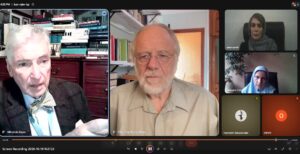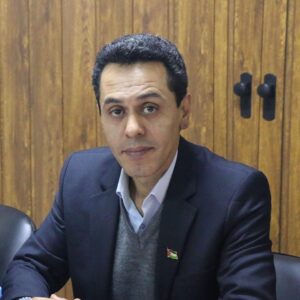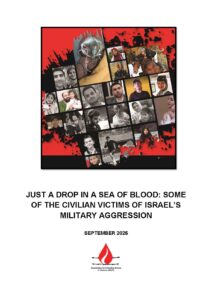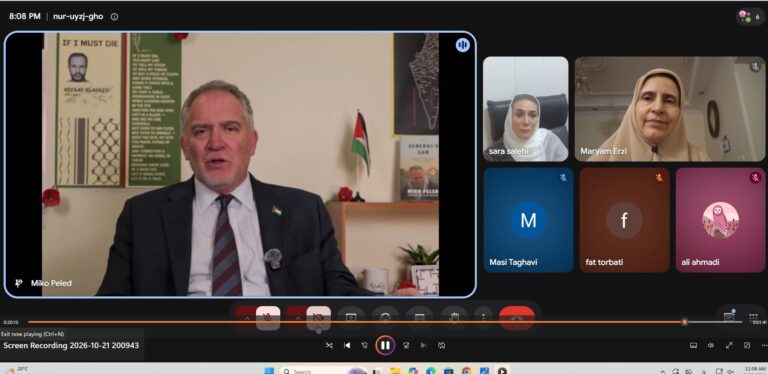
On Wednesday, 21 October 2026, the Organization for Defending Victims of Violence (ODVV), a Tehran-based human rights organization with special consultative status with the UN Economic and Social Council, held an online conversation with Miko Peled, an Israeli-American author and human rights activist, founder and president of Palestine House of Freedom, and author of The General’s Son.
The discussion focused on the human impact of war, civilian suffering in Palestine and Iran, accountability for human rights violations, the political future of Palestine, and the international community’s responsibilities. The upcoming Israeli election and the place of human rights in public debate were also discussed. The views expressed by the speaker are his own and do not necessarily reflect the official position of the Organization for Defending Victims of Violence.
Solidarity with Iran and the connection between Palestine and Iran
Peled began by expressing solidarity with the people of Iran. He said that he and his colleagues had issued several statements condemning the assault against Iran and emphasized the connection between Iran’s support for Palestinian rights and the pressure he believes Iran faces as a result.
He argued that U.S. foreign policy in West Asia is shaped by the Israeli regime and its supporters and lobbying networks in the United States. In his view, the region’s instability must be understood in the historical context of the occupation of Palestine and colonial intervention. He stressed the importance of understanding the history of Palestine and the wider region, including the period before the establishment of the Israeli regime and the effects of colonial intervention.
Peled also referred to a visit he made to Iran in 2018, when he spoke with high school students, medical students and members of the military. He described those conversations as a positive experience and emphasized the importance of dialogue and mutual understanding among the peoples of the region.
Civilian suffering from Iran to Gaza
A significant part of Peled’s presentation addressed the human cost of attacks and war. Referring to the killing of schoolchildren during the assault on Iran, he drew a connection with the repeated killing of children and families in Palestine, including families attacked in their own homes.
He described the suffering in Gaza over the past three years as particularly severe, while stressing that the assault on Palestinians did not begin in recent years. In his view, the current crisis must be understood within a much longer historical context.
Peled also emphasized that the destruction of Gaza extends beyond buildings and infrastructure. He said that the damage includes the loss of historical sites, monuments and cultural heritage accumulated over thousands of years.
He warned that, without decisive international action, the destruction witnessed in Gaza could spread to other parts of historic Palestine, particularly Jerusalem and the Al-Aqsa compound. Referring to statements by Zionist political currents about displacing Palestinians and changing the status of historical and religious sites, he urged the international community to take the risks seriously.
Iran: restraint, military pressure and the information war
Peled condemned the assault against Iran by the Israeli regime and the United States. He praised what he described as restraint and discipline in the Iranian government’s response, arguing that this restraint was helping to preserve human life and should not be mistaken for weakness.
He also argued that pressure on Iran extends beyond military action. In his view, media narratives and educational systems contribute to portraying Iran and its people in an unjustifiably negative way. He called for greater attention to perspectives that receive less space in mainstream media.
Peled further argued that U.S. policies in the region harm Americans as well as the people of the countries targeted by those policies. Peled pointed to signs of change among some elected officials in the United States, whom he described as increasingly open to discussing a post-Zionist future for Palestine, particularly in light of the sacrifices made by the Palestinian people in recent years. He also argued that the assault against Iran had made more Americans aware of the consequences of U.S. support for the Zionist regime.
The two-state solution or a democratic system with equal rights?
Responding to a question about the prospects for a two-state solution, Peled raised three central questions: how such a solution could work under current conditions, how the division of historic Palestine could be justified, and what advantages it would offer over a democratic system guaranteeing equal rights throughout historic Palestine.
He questioned the practical viability of a separate Palestinian state, pointing to settlement expansion and the integration of infrastructure and urban areas across the West Bank and other territory under Israeli control. He cited a figure of approximately one million settlers in the area, including East Jerusalem, and argued that the existing settlements, cities, roads and commercial centres made territorial separation increasingly difficult.
Peled also criticized what he called the “Judaization” of Jerusalem, describing it as a process aimed at removing the city’s non-Jewish population and heritage. He questioned why Palestinians should accept a state covering only a small portion of their historic homeland while settlers and colonizers retain a larger share.
As an alternative, Peled advocated replacing the apartheid system with a democratic state throughout historic Palestine, where everyone would enjoy equal rights and the principle of “one person, one vote” would apply. He stated that, in his view, a free Palestine must encompass all of historic Palestine.
International law and the need for accountability
Addressing a question about the role of international law in preventing violations against civilians, Peled said that the central problem was not simply the absence of legal definitions, but the failure to enforce existing standards. He referred to the crimes of genocide and apartheid and argued that the political influence of the Israeli regime in the United States, Europe and other countries obstructs effective enforcement.
In his view, victims cannot obtain justice while accountability mechanisms remain ineffective. He described the establishment of a free and democratic Palestine as the first step toward creating mechanisms for reparations, compensation and accountability for violations committed against Palestinians.
Peled also highlighted the need to address the situation of Palestinian political prisoners, provide treatment for their physical and psychological injuries, facilitate the return of Palestinian refugees to their homes, and rebuild Gaza. He stressed that reconstruction must take account of the extensive damage to the area’s historical and cultural heritage.
Referring to Gaza, Peled argued that much of the devastation could, in his view, have been prevented through timely international intervention and the effective application of international law. He urged the international community to move beyond responding to atrocities after they occur and to act on the basis of past experience to prevent further destruction.
The international community and opposition to normalization
Peled criticized what he viewed as the insufficient action of major Asian and African countries and some Arab states in support of the Palestinian people. He argued that responsibility for stopping the attacks and protecting Palestinian rights should not rest solely on Western countries, particularly because he believes some Western governments are themselves complicit in the continuation of the situation.
He referred to the actions of Yemen’s Ansar Allah forces and forces operating in southern Lebanon, describing them as part of what is known as the Axis of Resistance. In his assessment, these forces had imposed significant costs on the Israeli regime, while the response of other governments remained inadequate.
Peled called on governments to apply pressure through measures including sanctions, the suspension of trade, the severing of diplomatic relations, and the termination of sporting and other ties with the Israeli regime. He also warned against the normalization of relations and urged people in different countries to press their governments to take practical action in support of Palestinian rights.
The Israeli election and the place of human rights
In the final part of the discussion, Peled was asked whether civilian suffering and accountability were receiving sufficient attention in Israeli public debate ahead of the election. He offered a strongly critical assessment of Israeli society and politics, arguing that support for the government’s policies—including policies he described as genocide, apartheid and ethnic cleansing—was widespread.
Peled predicted that Benjamin Netanyahu’s governing coalition would emerge stronger from the election and that Netanyahu would remain prime minister. He based this prediction on his reading of the political landscape and the level of public support for the government’s policies. This was Peled’s assessment at the time of the conversation, rather than a confirmed election outcome.
He also argued that there was no effective, widespread opposition to Zionism within Israeli society. He challenged those who oppose government policies to speak out and demand an end to the attacks and the release of political prisoners.
In conclusion Throughout the conversation, Peled emphasized the connections between Palestine, Iran and the wider region. He identified occupation, foreign intervention and the selective enforcement of international law as central factors in the continuing crisis. His proposed vision was a free and democratic Palestine guaranteeing equal rights, alongside accountability for human rights violations, reparations for victims, the return of refugees and practical international action to prevent further violence. He concluded by emphasizing the role of individuals, media and civil society in raising public awareness and pressing governments to act. In his view, hope for a different future comes from having a clear objective and working persistently to achieve it.