Odvv Exclusive Interview with Bruno Lima Rocha Beaklini
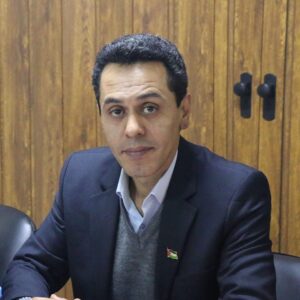
As part of its ongoing efforts to assess developments related to United Nations human rights mechanisms, particularly in the context of accountability and representation, the Organization for Defending Victims of Violence (ODVV) conducted an expert exchange with Dr. Bruno Lima Rocha Beaklini, a Brazilian political scientist, journalist, and professor of international relations.
This discussion focuses on the legal, political, and ethical implications of Israel’s potential candidacy for the 2027–2029 term of the Commission on the Status of Women (CSW), especially in light of its record in conflict-affected areas such as Gaza. The interview explores broader concerns related to double standards within the UN system, the instrumentalization of gender discourse, and the role of civil society in ensuring that the voices of affected women—particularly in Palestine—are meaningfully represented in international forums.
The perspectives expressed in this interview reflect the expert views of the interviewee and do not necessarily represent the official position of the Organization for Defending Victims of Violence.
Full Interview Transcript
From your perspective, what forms of advocacy (e.g., expert opinions, public engagement, policy dialogue) could be most effective in ensuring that the voices of affected women and girls are meaningfully reflected in this debate?
The testimony and presence of Palestinian women in international forums is always very significant. Another theme is demonstrating – through female voices – how Israel is promoting an expanded genocide: killing women, killing pregnant women, mutilating girls, and hindering forms of reproduction such as the biome in Occupied Palestine. The Zionists poison Gaza and the West Bank, and they do so in southern Lebanon and in parts of Syria under direct occupation or constant bombardment. The presence of women from these territories under liberation struggle is always a powerful and effective voice.
1. How do you assess the compatibility of Israel’s record regarding women’s rights—particularly in Gaza and other conflict-affected areas—with the mandate and principles of the Commission on the Status of Women?
Israel operates under the banner of “pinkwashing,” using Islamophobic prejudices to exaggerate the role of women in Zionist colonial society. The same occurs in the international articulations of the Zionist lobby. I remember that in November 2024, I was with a Palestinian comrade discussing the genocidal campaign against Gaza in the outskirts of Rio de Janeiro. It was a Wednesday night with the Copa Libertadores semi-final at the Maracanã stadium. There couldn’t have been more than 30 people in the audience, and yet the Zionists sent a provocateur who claimed to be a “feminist” and reproduced the fake news of the mass rape on October 7, 2023, and the false accusation of the murder of babies by the Palestinian Resistance. The employment of women in the colonial occupation forces also reflects this instrumental use of gender as a justification for genocide and the usurpation of land from the original Palestinian people.
2. As you are aware, the election of CSW members is based on regional group allocations, with Israel falling under the Western European and Others Group (WEOG). In this context, its continued membership after a decade-long tenure is procedurally possible. How do you assess the implications if Western states within WEOG were to support such a candidacy? Could this reinforce perceptions of inconsistency or double standards within the UN system, particularly regarding accountability for violations affecting women and girls?
The double standard and the supposed moral superiority of imperialists is a weapon of more than five centuries wielded by the imaginary West against Western Asia and territories of colonial expansion. The same occurs in the 21st century with the cause of women. For example: could these same “liberal” Western intellectuals assess the position of women in the scientific world of Iran, in academia, or in the leadership of political institutions, in the case of Pakistan but also the Islamic Republic? Unfortunately, the reinforcement of Orientalist prejudice and the denial of the role of women in modern societies with an Islamic majority is evident as a continuous hypocrisy of the Zionist colonizer and the decadent US Empire that sponsors it.
3. What key legal, political, or ethical arguments should civil society actors and UN member states emphasize when discussing this candidacy?
It shouldn’t be so difficult to block Israel’s candidacy for any position within the UN System. It would simply require replicating the same type of sanctions and loss of soft power that were applied to Apartheid South Africa. The South African government’s own testimony and international campaign attest to this. The Zionist colony has always been an ally of European supremacists in Africa, and now it would be no different. A country accused of genocide should be prohibited from being a member of any UN body or the International System. A concrete measure would be the withdrawal of all member countries of the Organization of Islamic Cooperation from areas where Israel has a presence. This would be of great value, reinforcing the Umma, at least as a concept, and diminishing the Zionist influence in the world.
4. From your perspective, what forms of advocacy (e.g., expert opinions, public engagement, policy dialogue) could be most effective in ensuring that the voices of affected women and girls are meaningfully reflected in this debate?
The testimony and presence of Palestinian women in international forums is always very significant. Another theme is demonstrating – through female voices – how Israel is promoting an expanded genocide: killing women, killing pregnant women, mutilating girls, and hindering forms of reproduction such as the biome in Occupied Palestine. The Zionists poison Gaza and the West Bank, and they do so in southern Lebanon and in parts of Syria under direct occupation or constant bombardment. The presence of women from these territories under liberation struggle is always a powerful and effective voice.