3 June 2026
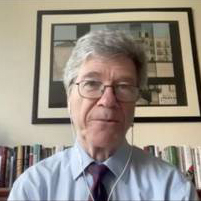
As part of its ongoing efforts to document grave violations of human rights and international humanitarian law resulting from the recent military aggression by the United States and Israel against Iran, the Organization for Defending Victims of Violence (ODVV) conducted an online interview with Professor Emily Crawford, a leading scholar of international law, international humanitarian law, and international criminal law at the University of Sydney Law School.
This interview was also conducted as part of broader efforts to strengthen human rights discourse, contribute to the development of specialized literature on international humanitarian law, and draw upon the perspectives of international experts and scholars to further examine the legal, humanitarian, and international dimensions of recent developments.
During this in-depth discussion, Professor Crawford examined the legal implications of attacks against civilians and civilian infrastructure, the responsibility of states under international law, the limitations and possibilities of existing accountability mechanisms, and the evolving role of international legal institutions in addressing contemporary conflicts. She also reflected on the importance of civil society, legal advocacy, and academic engagement in preserving the integrity of international law and resisting attempts to weaken its humanitarian protections.
The following is a summary of the key issues discussed during the interview:
Professor Crawford emphasized that any military operation must be assessed according to the fundamental principles of international humanitarian law, particularly the principles of distinction, proportionality, and military necessity. She explained that for an attack to be lawful, the target must qualify as a legitimate military objective and any expected civilian harm must not be excessive in relation to the anticipated military advantage. Attacks that fail to satisfy these requirements constitute violations of international humanitarian law rather than legitimate examples of collateral damage.
Addressing the issue of state responsibility, Professor Crawford explained that international law requires two primary elements for establishing responsibility: attribution and breach. Conduct must be attributable to a state and must constitute a violation of an international legal obligation. Where these elements are satisfied, states may incur international responsibility and accountability mechanisms such as the International Court of Justice (ICJ) and the International Criminal Court (ICC) may become relevant avenues for legal action.
Professor Crawford also discussed the structural challenges facing international institutions. While acknowledging the significant limitations created by the veto power of permanent members of the United Nations Security Council, she rejected the notion that the international legal system is powerless. She noted that states do not need to wait for Security Council action and can independently employ diplomatic, political, and economic measures in response to serious violations of international law.
A significant part of the discussion focused on attacks against civilians and civilian infrastructure. Professor Crawford observed that repeated patterns of destruction directed against civilian objects can raise serious questions about claims that such incidents result merely from mistakes or intelligence failures. She stressed that recurring attacks on civilian infrastructure require careful legal scrutiny, particularly when evidence suggests systematic rather than accidental conduct.
Regarding sanctions, Professor Crawford distinguished between comprehensive economic sanctions and targeted sanctions. She argued that broad sanctions often inflict severe suffering on civilian populations while failing to achieve their stated political objectives. By contrast, targeted measures directed at specific individuals, institutions, or sectors may be more effective and less harmful to ordinary civilians.
Professor Crawford strongly rejected claims that international law is “dead” or irrelevant. Although acknowledging the serious challenges posed by contemporary conflicts and geopolitical rivalries, she stressed that international law continues to function daily across a wide range of areas, including extradition, treaty implementation, international dispute resolution, and domestic judicial processes. The failures of enforcement in certain conflicts should not be confused with the collapse of the international legal order as a whole.
The discussion also examined the role of civil society organizations and legal advocacy networks. Professor Crawford highlighted the important contribution of non-governmental organizations in documenting violations, supporting accountability efforts, and providing evidence to international judicial institutions. She noted that civil society actors often possess greater flexibility than formal international organizations and can play a critical role in exposing violations and mobilizing public pressure.
One of the most significant legal issues discussed concerned attempts by major powers to expand the definition of legitimate military objectives. Professor Crawford referred to the longstanding United States position regarding so-called “war-sustaining industries,” under which certain economic sectors may be treated as lawful military targets. She emphasized that this interpretation has not been accepted by the overwhelming majority of states and has failed to become a rule of customary international law. According to Professor Crawford, legal scholars, governments, and civil society actors have played an important role in resisting efforts to broaden the scope of permissible military targets in ways that would undermine civilian protections.
The interview also addressed environmental destruction during armed conflict and the emerging concept of ecocide. Professor Crawford noted that although existing international humanitarian law contains provisions prohibiting widespread, long-term, and severe environmental damage, enforcement has historically been limited. However, she observed that growing concern about climate change and environmental harm has generated increasing support for recognizing ecocide as an international crime. She pointed to recent developments in international jurisprudence and the growing willingness of international tribunals to consider environmental consequences when assessing state responsibility and legal accountability. Professor Crawford concluded by emphasizing that the preservation of international law ultimately depends not only on courts and governments but also on the sustained efforts of academics, civil society organizations, legal practitioners, and ordinary citizens. Through scholarship, advocacy, public engagement, and legal action, these actors play an essential role in defending humanitarian norms and ensuring that attempts to weaken international legal protections do not succeed.