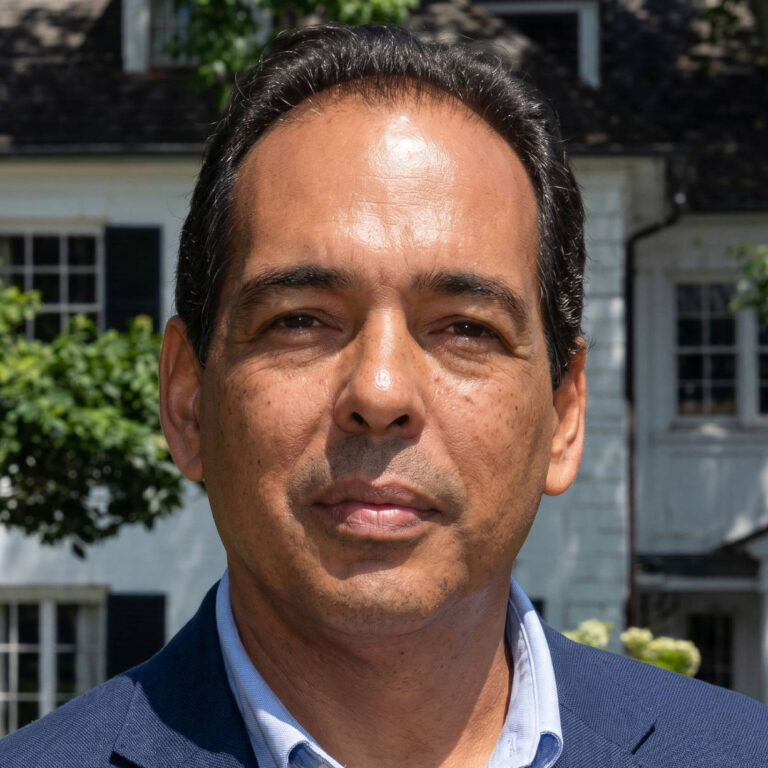
As part of its ongoing efforts to document and analyze the human rights implications of contemporary armed conflicts and the role of information control in shaping global narratives, the Organization for Defending Victims of Violence (ODVV) conducted an interview with Dr. Raúl Rodríguez, Cuban historian and academic, and Director of the Center for Hemispheric and United States Studies at the University of Havana.
Dr. Rodríguez holds advanced degrees in history, international relations, and English studies, and has extensive academic experience in teaching U.S. history and Cuba–U.S. relations to both Cuban and international students. He has also contributed widely to scholarly research on U.S. foreign policy, sanctions regimes, and Latin American and Caribbean studies, and serves as Director of the National Program of Social Sciences and Humanities in Cuba.
In this interview, Dr. Rodríguez reflects on the role of media silence, algorithmic visibility, and strategic communication in shaping public perception of conflicts, including the underreporting of civilian harm. He also examines the impact of simultaneous diplomatic engagement and military pressure on the credibility of international negotiations, drawing on comparative insights from Cuba and broader Global South experiences under sanctions. Furthermore, he discusses the humanitarian consequences of economic coercion and the challenges of amplifying civilian suffering in global forums where institutional responsiveness remains limited.
The interview highlights the intersection between media structures, geopolitical power, and international accountability in contemporary conflict environments.
The perspectives expressed in this interview do not necessarily reflect the official positions of the Organization for Defending Victims of Violence.
The full transcript of this important exchange follows:
1. In Iran, when schools such as the Minab school are attacked—resulting in the deaths of 168 children, with some families still unable to recover the remains of their loved ones—this is not just a number; entire families and communities are deeply affected. Why do such human-centered narratives receive limited attention in international media, and how can this silence be effectively challenged?
In this day an age where information flows are seemingly endless one of the most effective tools in contemporary international relations is not communication but the absence of it. Strategic silence, whether by states, militaries, or media establishments, has become more and more a calculated form of messaging in an attempt to control escalation, generate perceptions, and manage domestic and international audiences. The decision not to report, not to respond, or not to acknowledge an event can be just as consequential as any official statement.
Labels and sound bites usually substitute analysis of events and contribute to silence and bury atrocities like the Minab massacre of young girls, the ongoing genocide in Gaza or the systematic destruction of southern Lebanon. Across the world, those who speak out are facing growing hostility. Human rights protections are being rolled back, and violence and harassment – particularly online – are becoming increasingly normalised.
Legitimate self-defence is presented as defiance if it comes from Iran or Cuba who are under threat and aggression and aggression and genocide a present as self-defence if it comes from Israel. Western media conglomerates control most outlets and therefor what is published and a few big tech firms control de algorithms. Some times most vital investigation—a story of global consequence is published —only to watch it silently sink into obscurity.
These stories that are not in accordance with the dominant narrative often see its reach plummeted to zero. It amounts to a “communicative limbo” of the shadow ban, a form of “social erasure” the content remains on line but shadow banning becomes a “silent censorship.” the algorithm hides it from your followers’ feeds and search results without notifying.
2. When, in the case of Iran, diplomatic engagement is discussed while pressure and military actions continue simultaneously, what message does this send about the credibility of diplomatic processes in today’s international system?
What has repeatedly happened in the case of U.S.- Iran since May 2025, that is for the last 12 months obviously affect the credibility of the diplomatic process as the U. S. government on the one hand speaks about the importance of diplomacy and on the other attacks Iran in the middle of negotiations. Us actions can be construed as a justification that tries to shift the blame on the target of their attack presenting them as the culprit for failed negotiation or dialogue.
At the moment, we are facing a similar situation. The trump administration is saying that they prefer dialogue and diplomacy to deal with issues between Cuba and the United States and at the same time increasing sanctions and military threat that obviously would lead any observer to conclude that diplomacy and engagement for the US has a different meaning, it means imposition and submission of their target state.
3. Drawing on Cuba’s experience with sanctions, when ordinary people in Iran face shortages of medicine and pressure on healthcare services, what practical approaches can help reduce the direct suffering of civilians?
As to the case of Cuba, we are experiencing an increasing humanitarian impact of US unilateral sanctions on health care, sanitation and even the possibility issues with water borne diseases. As secondary sanctions and extraterritoriality affect the government ability to provide for these basic services to Cuban citizens. The practical approaches in Cubas case is to look for alternatives, In the case of oil and energy turning to local production and to alternatives like solar and wind power costly as they are but there is no other way.
Also, even in the face of secondary extraterritorial sanctions reaching out to other Global South countries for complementary collaboration is the other option left.
4. In your view, how can the suffering of Iranian civilians—who have been deliberately affected by attacks attributed to the United States and Israel—be more effectively heard across the Global South, especially when international institutions appear limited in their responsiveness?
The option is the tireless denunciation of the atrocities committed in all possible venues and international fora providing data and information of the human impact and the utmost disregard for international law that the US and Israel actions mean on a daily basis for any state and people that refuses and resists its domination and impositions.