Amid accelerating geopolitical transformations and the reconfiguration of global power balances in the twenty-first century, the Organization for Defending Victims of Violence (ODVV) conducted a specialized interview to examine the strategic implications of shifting international dynamics. As rivalries intensify among established and emerging powers, and as unilateral policies increasingly challenge multilateral frameworks, understanding the structural logic behind these developments has become essential. In this context, ODVV sought analytical insight from a scholar whose work focuses on the realpolitik of contemporary global power transitions.
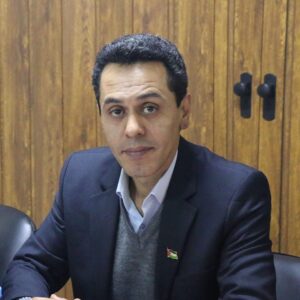
Thomas Guénolé, author of The Shock of Empires in the 21st Century (Armand Colin, with a foreword by former French Foreign Minister Hubert Védrine), is a professor of international relations at Schiller International University and Associate Professor of geopolitics at Audencia. His research examines the rise of emerging superpowers such as China, India, and Indonesia, and the strategic adjustments of Western states in response. Drawing on his expertise in geopolitics and international strategy, Guénolé provides a structured analysis of power competition, unilateral coercive policies, and the broader consequences of geopolitical rivalry for international stability and legal order. The views expressed in this interview are those of the interviewee and do not necessarily reflect the official position of the Organization for Defending Victims of Violence.
The full transcript of this important exchange follows.
1. In your research, you examine civil disobedience and nonviolent resistance against authoritarian and far-right governments. From a political science perspective, how do you distinguish between legitimate civil disobedience rooted in socio-economic grievances and movements that may be influenced, instrumentalized, or supported by external actors? What analytical criteria help differentiate grassroots mobilization from externally shaped destabilization efforts?
Legitimate civil disobedience is usually anchored in identifiable, long‑term socio‑economic or political grievances that pre‑exist the protest cycle: wage stagnation, corruption, police brutality, rigged elections, or structural discrimination documented by independent scholarship and NGOs. Movements with deep local roots tend to show dense networks of unions, community groups, professional associations, and student organizations, often with a history of prior, smaller‑scale mobilizations and issue‑based campaigns.
By contrast, externally shaped destabilization efforts typically display a sudden, issue‑poor protest agenda, a rapid escalation without organic coalition‑building, and an over‑reliance on a narrow NGO or media ecosystem closely linked to foreign governments or partisan diasporas. Political scientists look at funding chains, training programs, and communication infrastructures: a movement whose logistics, narrative frames, and elite spokespeople are disproportionately tied to external patrons is more plausibly interpreted as an instrument than as a spontaneous civil society actor.
Analytically, three criteria are central. First, agenda‑setting: grassroots movements foreground concrete, locally resonant demands, whereas externally supported campaigns foreground abstract regime‑change language and foreign policy talking points. Second, risk distribution: in genuine civil disobedience, local actors bear the main personal risks—arrests, job loss, repression—while outside support is auxiliary; when the riskiest acts fall to marginal or expendable groups while core leadership remains physically or politically insulated, instrumentalization is more likely. Third, framing asymmetries: if protest rhetoric mirrors almost verbatim the discourse of a specific foreign capital or media sphere, including its priorities and silences, the hypothesis of strategic alignment with an external agenda gains weight, even if authentic grievances remain the initial spark.
2. In your forthcoming book The Shock of Empires in the 21st Century, you analyze the realpolitik of emerging powers such as China. How do you assess the role of major powers in weaponizing human rights narratives within geopolitical competition? To what extent can human rights discourse become entangled with strategic interests, and how should scholars critically evaluate such dynamics without undermining the universality of human rights principles?
Great powers across the spectrum—Western and non‑Western alike—have long used human rights narratives as tools of statecraft, selectively amplifying abuses in rival states while soft‑pedalling or relativizing comparable violations by allies. The United States and its European partners, for instance, underline repression in China or Russia at the UN Human Rights Council while remaining more muted on violations in strategically useful regimes, just as Beijing and Moscow spotlight Western racism, surveillance, or militarism to deflect scrutiny of their own systems. Emerging powers have learned to play this game: China, for example, promotes a “sovereignty‑first” reading of human rights in multilateral forums, tabling resolutions that re‑centre state control and development while downgrading civil and political rights monitoring.
From a realist perspective, human rights discourse becomes enmeshed with power competition whenever naming‑and‑shaming, sanctions, or international investigations are deployed selectively, in ways that map neatly onto alliance structures and resource corridors. The Belt and Road Initiative illustrates how economic dependence can translate into diplomatic support: many states benefiting from Chinese infrastructure projects backed Beijing’s National Security Law in Hong Kong at the Human Rights Council, signaling how material incentives shape normative alignments. The key analytical task for scholars is therefore not to dismiss human rights as mere hypocrisy, but to systematically compare rhetoric and behavior: who condemns whom, when, in which institutional venues, and with what consistency across similar cases.
Maintaining the universality of human rights requires a double move. First, apply the same legal benchmarks—deriving from the Universal Declaration and core UN treaties—to all states, regardless of regime type or geopolitical alignment. Second, distinguish clearly between legal assessment and political instrumentalization: pointing out that major powers exploit human rights strategically does not weaken the underlying norms; it exposes the gap between professed values and actual practice, a gap that exists in Washington, Brussels, Beijing, Moscow, and beyond.
3. What are the legal and political obligations of a sovereign state in protecting the safety of its citizens while simultaneously safeguarding fundamental rights such as freedom of expression and peaceful assembly? How should states balance these responsibilities in contexts of political unrest?
Under international human rights law, states have a dual obligation regarding rights such as freedom of expression, assembly, and association: a negative duty not to interfere arbitrarily, and a positive duty to protect individuals from violence—including from private actors hostile to demonstrations. The right of peaceful assembly, as interpreted for example under the International Covenant on Civil and Political Rights and regional instruments, requires authorities to create an “enabling environment”: legal frameworks and policing practices must facilitate, not merely tolerate, protests.
At the same time, states are responsible for public safety and order. Restrictions on protests—time, place, manner—are lawful only if they meet strict tests: legality (clear basis in law), necessity (no less restrictive means available), and proportionality (the least rights‑infringing option compatible with the protective aim). Blanket bans, preventive mass arrests, or indiscriminate use of force against peaceful demonstrators generally fail these tests, whereas targeted measures against specific, imminent threats of violence may be justified.
In contexts of political unrest, the benchmark is not regime survival but rights protection. Authorities should prioritize de‑escalation, advance dialogue with organizers, differentiated policing that separates peaceful participants from violent actors, and independent oversight of security forces. International standards also stress accountability: serious abuses—unlawful killings, torture, enforced disappearances—trigger a duty to investigate, prosecute, and provide remedies, irrespective of the political orientation of the victims or the alleged perpetrators.
4. Based on your extensive media experience, how do you interpret differences in media framing when protests occur in states that challenge Euro-American hegemony versus allied states of the United States? What are the broader implications of these framing patterns for public opinion, international legitimacy, and global power dynamics?
Comparative media research indicates that protest coverage varies systematically with the geopolitical status of the target state. In countries perceived as challenging Euro‑American hegemony, mainstream Western outlets tend to highlight democratic aspirations, courage of protesters, and brutality of authorities, often with an emphasis on universal values and a personalization of repression. When similar or worse abuses occur in allied states, coverage is more likely to foreground “stability,” “complex security environments,” or cultural particularities, diluting responsibility and embedding repression within narratives of counter‑terrorism, sectarian management, or regional chaos.
These framing asymmetries shape public opinion by altering who is seen as a legitimate victim and who is cast as a security threat or a regrettable collateral casualty. Protesters in adversarial states are more readily portrayed as authentic representatives of “the people,” while protesters in friendly states can be problematized as extremists, foreign‑backed, or irresponsible disruptors of order. Over time, such patterns help normalize double standards in international reactions: sanctions, diplomatic isolation, and legal initiatives are more likely against rivals, whereas allies benefit from soft‑pedalled criticism, euphemistic language, or a focus on individual “excesses” rather than systemic issues. In a world of competing empires, this media ecology reinforces bloc politics. Narratives produced in Washington, Brussels, Beijing, or Moscow circulate through transnational outlets and digital platforms, each presenting its preferred protesters as heroes and others as mobs, infiltrators, or terrorists. For scholars, the task is to map these framing biases empirically—through content analysis, sourcing studies, and comparison of parallel events—without romanticizing any camp: media aligned with non‑Western powers also deploy selective indignation and strategic silences when allied regimes crackdown on dissent.