Introduction:
The Organization for Defending Victims of Violence (ODVV), in line with its mission to document and monitor developments related to United Nations human rights mechanisms, continuously monitors the candidacy of countries for membership in specialized UN bodies. Within this framework, recent reports regarding Israel’s intention to run for the 2027–2029 term of the Commission on the Status of Women (CSW)—following its continuous membership from 2016 to 2025—have raised serious concerns among human rights activists and international civil society organizations.
The Commission on the Status of Women, as the highest intergovernmental body on women’s empowerment and advocacy, has an explicit mandate to protect women and girls worldwide. However, Israel’s record in the occupied territories, particularly the Gaza Strip, raises fundamental questions about the compatibility of this country’s behavior with the principles and objectives of the Commission. Reports from international organizations indicate extensive harm inflicted upon Palestinian women and girls as a result of prolonged military operations and siege.
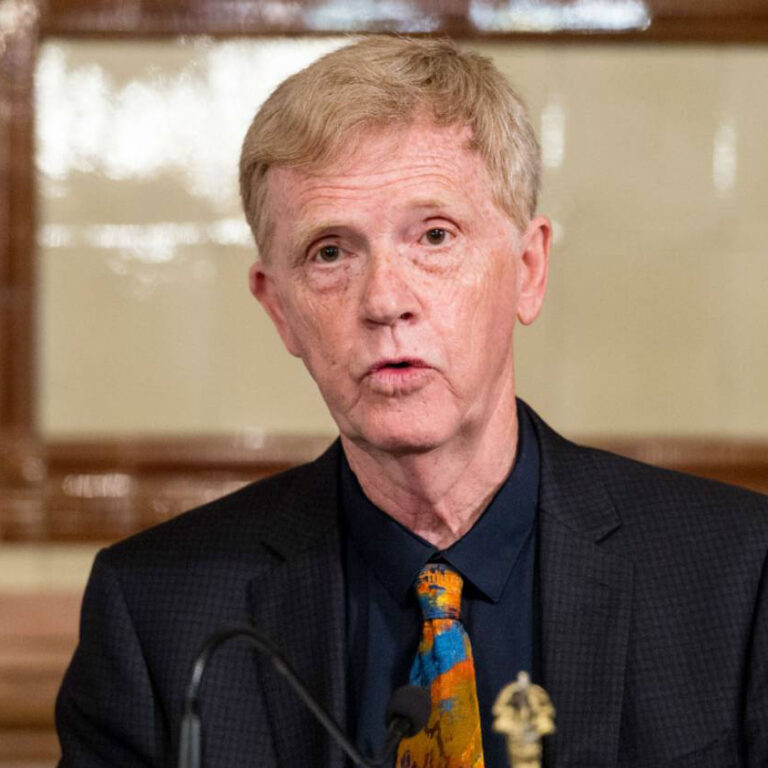
In response to this situation, and with the aim of examining the legal, political, and ethical dimensions of this candidacy, the Organization for Defending Victims of Violence conducted an exclusive interview with Mr. Peter Ford, a distinguished expert on Middle East affairs and human rights, on February 25, 2026. This interview was conducted to clarify the potential implications of accepting Israel’s candidacy, international reactions, and the role of civil society in amplifying the voices of affected women.
The full transcript of this important exchange follows.
Q1. How do you assess the compatibility of Israel’s record regarding women’s rights—particularly in Gaza and other conflict-affected areas—with the mandate and principles of the Commission on the Status of Women?
Peter Ford:
It is outrageous that Israel should even be a candidate for membership of the Commission. Its behavior in Gaza alone should disqualify it from applying. With over 40,000 women killed, a larger number maimed, countless miscarriages, and hundreds of thousands of women and girls receiving inadequate medical care because of Israel’s sieges, still continuing, it beggars belief that a country with Israel’s recent track record could ever be a member of a Commission which has a mandate to protect women and girls.
Q2. How do you assess the implications if Western states within WEOG were to support Israel’s candidacy? Would such an outcome reinforce perceptions of inconsistency or double standards in the UN system, particularly regarding accountability for violations affecting women and girls?
Peter Ford:
The mere fact that Israel is accepted by Western countries as a member of WEOG tells us all we really need to know about the Palestine issue. It tells us that Israel is considered to be an honorary member of the White West. If the other members of WEOG did support Israel’s candidacy for membership of the UN Commission on the Status of Women it would entirely undermine the claims of those countries to be themselves exemplars of good behavior with regard to women’s status.
On the other hand, if they reject Israel’s bid, as I hope and expect, it will underline Israel’s pariah status following its savage onslaught on Gaza, which continues even now there is a nominal ceasefire. Over a hundred women have been killed since the ceasefire supposedly came into operation.
Q3. What key legal, political, or ethical arguments do you consider most important for civil society and UN member states to highlight when discussing Israel’s candidacy to the CSW?
Peter Ford:
One issue which springs to mind is how a country whose leaders are facing charges of genocide levelled by the prosecutors of the International Criminal Court (ICC) could possibly even be considered for membership of UN bodies of which it is not already a member. And what does that tell us about the support Western countries are giving, or in this and other cases not giving, to the ICC?
Q4. From your perspective, what forms of advocacy (statements, expert opinions, public campaigns, etc.) could be most effective in ensuring that the voices of affected women and girls are meaningfully reflected in the debate on this candidacy?
Peter Ford:
It is sadly the case that this issue of Israel’s attempt to become a member of the UN Commission on the Status of Women has attracted very little public attention, at least in the West. The best way of combatting this lack of attention can only be to give voice in whatever ways are available to the women and girls of Gaza. In these days when social media are so powerful and so much less easy to control than mainstream media it must be hoped that social media will enable those voices to be heard. In addition to this, organizations like ODVV have a crucial role to play, through social media and where possible mainstream channels, in raising awareness of what would be an abomination if Israel and its backers succeeded in respectabalising it in a UN forum in which Israel should be pilloried, not accepted approvingly.