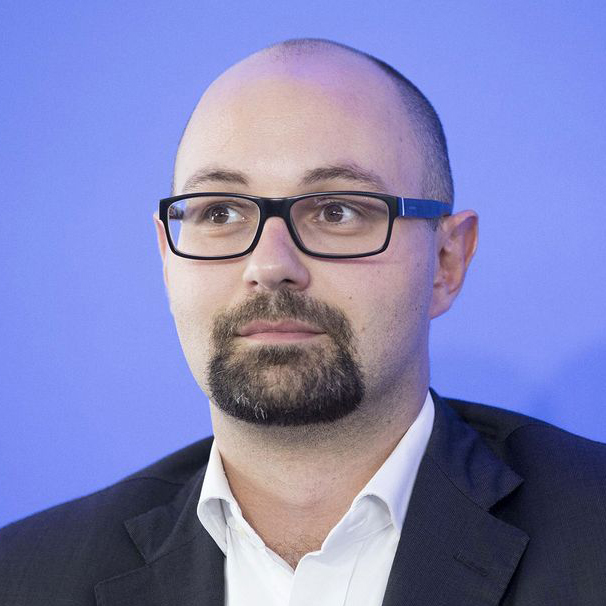
As part of its ongoing efforts to document serious humanitarian and legal concerns arising from recent developments in Iran, the Organization for Defending Victims of Violence (ODVV) conducted an in-depth exchange with Dr. Thomas Gennolé, a French political scientist, author, and international affairs analyst whose work focuses on geopolitics, global power structures, and international legal accountability.
This interview explores key legal and political questions surrounding the targeting of civilian infrastructure, the protection of non-combatants under international humanitarian law, and the challenges of enforcing accountability in situations involving major global powers. It also addresses broader issues such as the role of media narratives, the legal characterization of targeted killings, and the limits of existing international mechanisms in responding to large-scale violations.
The discussion aims to contribute to ongoing international discourse by highlighting the gap between established legal norms and their implementation in practice, particularly in contexts where geopolitical considerations shape institutional responses.
The perspectives expressed in this interview do not necessarily reflect the official positions of the Organization for Defending Victims of Violence.
The full transcript of this interview follows:
1. In Iran and in some other conflicts, when schools, hospitals, and people’s access to medicine are damaged, what impact does this have on global public perception of Western states’ human rights claims? How should this contradiction be addressed in international discussions?
When Western States bomb hospitals, schools, and medical supply chains, or finance and politically cover those who do, while simultaneously invoking human rights as a cornerstone of their foreign policy, the contradiction is unjustifiable. The pattern is consistent. In Gaza, in Lebanon, in Iran, Western governments have applied a two-tier framework: full-throated condemnation of violations committed by adversaries, and silence or active protection when the perpetrators are allies.
When States that preach the rules-based order demonstrably exempt themselves and their allies from those rules, they destroy the universality that gives the rules their force. Double standards erode the principles of international humanitarian law and undermine its credibility. This is not a soft reputational problem. It is a hard structural crisis. The Global South now systematically rejects Western human rights leadership precisely because it reads as geopolitical instrumentalization.
Solving this issue requires consistency of legal standards, regardless of who the perpetrating State is. Western States must endorse international investigations (ICC, UN fact-finding missions, etc.) even when their own allies are the subject. They must stop vetoing Security Council resolutions that would trigger accountability mechanisms for allied powers. Anything short of that is not a defense of human rights. It is the management of human rights discourse in the service of strategic interests.
2. In incidents such as the Minab school case in Iran, where 168 children lost their lives, how can such events be kept visible in global media and discussions, rather than being forgotten or reduced to mere statistics?
The Minab school attack, on February 28, 2026, killed between 156 and 168 people, the overwhelming majority of them girls aged 7 to 12, struck during morning classes. Multiple independent investigations attributed it to the United States. The double-tap technique (a second strike aimed at survivors sheltering in the prayer hall, and at parents and first responders who had rushed to the scene) was documented by Red Crescent medics and confirmed by eyewitnesses. Amnesty International published a dedicated investigation. UNESCO condemned the attack.
Yet the structural risk of erasure is real. Research analyzing over 14,000 news articles from Western outlets during the Gaza War demonstrated systematic dehumanization of non-Western civilian victims. Palestinian children received individualized coverage at half the rate of Israeli victims in The New York Times. Western media applied doubt-casting language almost exclusively to non-Western casualty figures. BBC devoted 44% of its child victim coverage to the Israeli side, which represented less than 1% of actual child deaths. So, there is every reason to expect the same dynamics with Iranian civilian victims.
The counter-strategy should have three pillars. First, naming: each victim named, each face published, each biography recorded is a structural resistance to abstraction. Statistics numb; individuals do not. Second, legal anchoring: once evidence is preserved and submitted to formal investigative mechanisms (the ICC, the UN Fact-Finding Mission, universal jurisdiction courts), the case becomes legally undeletable, even if media attention wanes. Third, persistent relinking: journalists, human rights organizations, and political actors must systematically reconnect future discussions of International Humanitarian Law, of civilian protection, of Western credibility, back to specific events like Minab, by name, by date, by documented fact. The goal is to make forgetting politically costly.
3. In Iran, when certain scientists or civilians outside the battlefield are targeted—often together with their families—what does this mean in terms of the legal definition of terrorism? To what extent can we expect condemnation of such actions by international institutions?
The International Convention for the Suppression of the Financing of Terrorism defines a terrorist act as “any act intended to cause death or serious bodily injury to a civilian (…) when the purpose of such act, by its nature or context, is to intimidate a population, or to compel a government or an international organization to do or to abstain from doing any act”. UN Security Council Resolution 1566 (2004) uses equivalent language.
Scientists working in civilian fields (nuclear energy, physics, engineering) are civilians under international law. They bear no arms, direct no hostilities. Targeting them, and deliberately killing their families alongside them, satisfies both material and purposive elements of these definitions: the act is lethal, the victims are civilians, and the objective (compelling Iran to abandon its nuclear programme) is explicitly to coerce a government. Academic legal analysis of this specific pattern of assassinations by Israeli and US actors has concluded that such killings outside the framework of armed conflicts constitute a clear violation of fundamental principles such as the right to life, the prohibition of extrajudicial executions, and the right to a fair trial, and may amount to crimes against humanity when they form part of an organized and widespread policy directed against a civilian group.
The honest answer about international institutional condemnation is that it will not come automatically. The US holds a Security Council veto. Israel and the US are, for different reasons, outside the ICC’s jurisdiction for acts committed on their territory. This is precisely why Iran was urged by DAWN and other human rights organizations to file an Article 12(3) declaration granting ICC jurisdiction over crimes committed on Iranian soil from February 28, 2026 — the same mechanism Ukraine and Palestine have used. Without that jurisdictional bridge, the gap between legal characterization and institutional accountability remains wide. Naming the act as terrorism is legally defensible. Expecting Western institutions to name it that way, while those same institutions arm the perpetrators, requires a level of institutional independence those institutions have not demonstrated so far.
4. In the recent escalation, around 3,700 people were killed and many civilian infrastructures in Iran—including medical, educational, industrial, and petrochemical facilities—were severely damaged, all of which were non-military targets. What can be done to ensure that existing international human rights and humanitarian law prohibiting harm to civilians and civilian infrastructure is respected? Is there any mechanism to address the deliberate disregard of these rules by attacking states?
By early April 2026, documented casualties in Iran reached between 3,468 and 6,000 killed, including over 1,700 confirmed civilians, among them over 200 children. Infrastructure damage included 20 hospitals, 36 schools, and 98 residential areas struck. Petrochemical and energy facilities were targeted systematically, prompting Amnesty International to warn of war crimes and catastrophic harm to civilians from the resulting fires, toxic releases, and collapse of essential services. The Diakonia IHL Centre explicitly condemned US President Trump’s public statements of April 5-7, 2026 threatening “a whole civilisation will die tonight” as endorsements of attacks on civilian objects, themselves a violation of International Humanitarian Law before a single bomb is dropped.
The principle of distinction (Additional Protocol I, Article 48), the principle of proportionality (Article 51(5)(b)), and the prohibition on attacks against objects indispensable to civilian survival are binding on all parties. The rules exist. The question is enforcement.
The mechanisms available are the following, in order of realistic accessibility:
-ICC Article 12(3) declaration by Iran: grants jurisdiction without requiring Rome Statute membership, as demonstrated by Ukraine and Palestine. Iran’s failure to file this declaration as of early 2026 weakens the accountability pathway.
-UN Fact-Finding Mission: already engaged, but dependent on state cooperation and Security Council support — both constrained by the US veto.
-Universal jurisdiction: several European states have national legislation enabling prosecution of war crimes committed abroad when victims or perpetrators have links to their territory. This route is slower but not subject to veto.
-International Court of Justice: state-to-state proceedings can establish state responsibility independently of criminal prosecution. Nicaragua-style cases have precedent value even without enforcement.
-Political cost through documentation: systematic, publicly accessible evidence packages — the model developed for Syria through the IIIM — create legal records that outlast political cycles.
The fundamental obstacle is not legal ambiguity. It is the structural impunity enjoyed by permanent Security Council members and their allies. Addressing that requires either reform of the UN Charter currently politically impossible, or building a critical mass of third-state pressure through universal jurisdiction, ICC referrals, and coordinated diplomatic isolation. These are slow mechanisms. They are, however, the only ones with a track record of producing results.
4. Given Iran’s strategic position and the importance of the Strait of Hormuz for the global economy, under what conditions could restricting movement in this area during wartime be considered consistent with international law and the right of self-defense?
Approximately one-fifth of the world’s daily oil consumption transits the Strait of Hormuz. Under the UNCLOS transit passage regime, the right of free, continuous, and unobstructed passage through international straits applies to all States and is not suspended during hostilities.
Iran can invoke Article 51 of the UN Charter (the right of self-defense) as a legal basis for restricting movement. Under the San Remo Manual on International Law Applicable to Armed Conflicts at Sea, belligerents may establish exclusion zones and, under certain conditions, impose a blockade. However, the law of naval warfare imposes strict conditions: a blockade must be effective, publicly declared, notified to neutral States, and must not cut off humanitarian supplies to civilian populations. It must also respect the crucial distinction between military vessels of the belligerent States and commercial ships of neutral third parties.
The critical legal constraint is necessity and proportionality. The International Court of Justice, in the Nicaragua case, affirmed that any defensive response must be necessary to repel the specific armed attack and proportionate to the threat. Given that the Strait carries trade for dozens of neutral states with no involvement in the conflict, a comprehensive closure would be disproportionate by virtually any legal standard. What Iran can legally do under a credible self-defense framing, consistently invoked and publicly documented, is targeted interdiction of vessels directly serving military operations against it: warships of the belligerent States, vessels carrying weapons or military supplies to US or Israeli forces.