Interview with Elijah J. Magnier
The Organization for Defending Victims of Violence (ODVV), in line with its mission to document and monitor developments related to United Nations human rights mechanisms, continuously monitors the candidacy of countries for membership in specialized UN bodies. In this framework, recent reports regarding Israel’s intention to run for the 2027–2029 term of the Commission on the Status of Women (CSW)—following its continuous membership from 2016 to 2025—have raised serious concerns among human rights activists and international civil society organizations.
The Commission on the Status of Women, as the principal intergovernmental body dedicated to advancing gender equality and the rights and empowerment of women and girls, has an explicit mandate to protect women and girls worldwide. However, Israel’s record in the occupied territories, particularly the Gaza Strip, raises fundamental questions about the compatibility of this country’s behavior with the principles and objectives of the Commission.
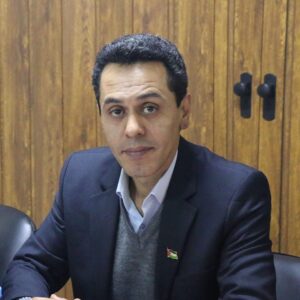
In response to this situation, and with the aim of examining the legal, political, and ethical dimensions of this candidacy, ODVV conducted an exclusive interview with Elijah J. Magnier, a Brussels-based veteran war correspondent and senior political risk analyst with over 37 years of experience covering the West Asia region, on February 24, 2026.
This interview explores the compatibility of Israel’s record with CSW’s mandate, the implications of Western support for Israel’s candidacy within the Western European and Others Group (WEOG), key legal and political arguments for civil society and member states, and effective advocacy strategies to ensure the voices of affected women and girls are meaningfully reflected in this situation.
1. How do you assess the compatibility of Israel’s record regarding women’s rights—particularly in Gaza and other conflict-affected areas—with the mandate and principles of the Commission on the Status of Women?
The Commission on the Status of Women is a functional commission of ECOSOC and the principal intergovernmental body dedicated to advancing gender equality, the rights and empowerment of women and girls.
United Nations-mandated mechanisms report that Israel’s recent actions in Gaza and the occupied Palestinian territory conflict sharply with the Commission’s aims. The Independent International Commission of Inquiry concluded that Israeli authorities committed war crimes and crimes against humanity during military operations in Gaza, including gender persecution and sexual and gender-based violence. The UN Human Rights Office has expressed grave concerns about widespread violations of international humanitarian and human rights law and highlighted the catastrophic impact on civilians.
This does not predetermine the election outcome, as CSW elections are political, not judicial. However, assessing “compatibility” must go beyond Israel’s domestic gender equality frameworks to consider how state power affects women’s rights in contexts of occupation, siege, displacement, detention, and armed conflict.
2. As you are aware, the election of CSW members is based on regional group allocations, with Israel falling under the Western European and Others Group (WEOG). In this context, Israel’s continued membership after a decade-long tenure is procedurally possible. With this in mind, how do you assess the implications if Western states within WEOG were to support Israel’s candidacy? Would such an outcome reinforce perceptions of inconsistency or double standards in the UN system, particularly regarding accountability for violations affecting women and girls?
If Israel is procedurally eligible within WEOG and gains support, the issue will concern legitimacy, narrative, and the credibility of the UN’s gender equality framework rather than procedure.
Several factors matter. First, the perception of selective accountability. When UN mechanisms document atrocity crimes and serious violations by multiple parties causing extensive civilian harm, elevating a state implicated in these findings to a leading women’s rights forum risks reinforcing claims that political alliances override accountability.
Second, the “women, peace and security” credibility gap. CSW discussions often address conflict-related harms to women and girls. If WEOG support is seen as shielding an ally from scrutiny despite disproportionate harm to women and girls, it may weaken future CSW outcomes by causing disengagement among affected groups and entrenching bloc politics.
Third, the risk of normalizing “forum shopping.” Supporting candidacies despite serious findings may encourage treating membership as reputational cover instead of responsibility. This concern grows when states publicly promote women’s rights as a foreign policy priority.
3. What key legal, political, or ethical arguments do you consider most important for civil society and UN member states to highlight when discussing Israel’s candidacy to the CSW?
Key arguments for civil society and member states to highlight Legal arguments:
a) Conflict-related obligations to protect women and girls under international humanitarian and human rights law, including conduct of hostilities rules and ensuring access to life-sustaining necessities and healthcare. The UN Human Rights Office has identified patterns raising grave concerns and called for access and accountability.
b) Accountability and cooperation with UN mechanisms. A key test is whether a candidate state cooperates with investigations, facilitates access, preserves evidence, and prosecutes credible allegations. The Commission of Inquiry report highlights concerns about cooperation and access.
c) Gender-based violence and reproductive health harms are matters of international concern, not secondary issues. The Commission of Inquiry reported sexual and gender-based violence and the destruction of sexual and reproductive healthcare.
Political arguments
a) CSW legitimacy relies on moral authority as well as its formal mandate. Voting patterns seen as rewarding impunity can undermine the Commission’s influence and acceptance of its conclusions.
b) Candidate states should be evaluated based on the spirit of the Beijing Platform for Action and the lived experiences of women under the state’s effective control, including in occupied territories and armed conflict situations.
Ethical argument
a) Do no harm to survivors. The debate should avoid becoming an abstract procedural contest and focus on the foreseeable impact on survivors and affected communities, including Palestinian women and girls who are victims of sexual violence and prisoners held without trial. The Commission of Inquiry has documented concerns about sexual violence patterns before and after 7 October.
b) Integrity of feminist multilateralism. Ethical consistency demands applying the same standards to allies and adversaries, especially when harm to women and girls is widespread and documented.
4. From your perspective, what forms of advocacy (statements, expert opinions, public campaigns, etc.) could be most effective in ensuring that the voices of affected women and girls are meaningfully reflected in the debate on this candidacy?
1. Targeted diplomatic engagement within WEOG: Provide WEOG missions in New York and capitals with concise, legally grounded memos translating UN findings into specific questions a state should address before supporting a candidacy, such as cooperation, investigations, access, and prevention measures. Base memos on UN primary sources.
2. Survivor-centred, evidence-based public interventions: Combine testimony and lived experience with verifiable documentation. The most effective interventions avoid rhetorical escalation and connect women’s accounts to concrete legal obligations and documented patterns. The goal is to make dismissing the issue as “politicised” politically costly.
3. Independent expert opinions: Commission brief analyses from international law and gender justice experts focusing on CSW’s purpose and reputational risk, without relitigating the entire conflict. Base the analysis on UN findings and the protection framework for women in conflict.
4. Coalition statements with disciplined messaging: A broad coalition of women’s rights groups, humanitarian actors, and medical associations is harder to marginalize than a single group. Keep messaging precise, avoid identity-based generalizations, and explicitly condemn sexual violence by any party to maintain credibility and broaden support.
5. Procedural visibility tactics at CSW and ECOSOC: Use side events, press briefings, and open letters aligned with the nomination and election calendar. Even without formal CSW eligibility criteria, consistent, timely, fact-based engagement can shape political momentum.