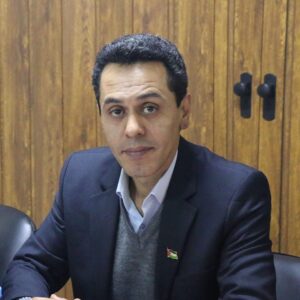
As part of its ongoing documentation of the humanitarian, legal, and media dimensions of recent conflicts involving Iran, the Organization for Defending Victims of Violence (ODVV) conducted an interview with Professor Oliver Boyd-Barrett, retired professor of media and communication studies.
This interview explores how Western media systems frame and represents civilian suffering in conflict zones, and how such narratives influence global public perception of war, accountability, and responsibility. Professor Boyd-Barrett provides a critical analysis of war reporting, highlighting the role of language, framing, and ideological structures in shaping public understanding of military operations and their consequences.
The discussion further examines the portrayal of civilian casualties, the use of terms such as “precision strikes,” and the broader political economy of international news production. It also addresses the structural limitations of mainstream media in reporting on conflicts involving major Western powers.
The interview contributes to a broader effort to document and analyze the intersection of media, power, and international conflict.
The perspectives expressed in this interview do not necessarily reflect the official positions of the Organization for Defending Victims of Violence.
The full transcript of this important exchange follows:
1. In your view, how do Western media portray the suffering of ordinary people when reporting on attacks in Iran? Does this kind of coverage make the reality seem less severe than it actually is?
Western media are not interested in the suffering of ordinary people in Iran unless they can argue that the suffering has been caused by the government agencies of Iran, or unless they can show that the suffering of ordinary people will contribute to instability that will help the West topple the government of Iran.
2. In the Minab school attack in Iran, 168 children were killed, and some victims—such as Makan Nasiri—are still missing. Why do such incidents receive so little serious attention in international media, and how does this affect public opinion?
Western media seek to underplay the negative humanitarian consequences of the unprovoked aggression of the US and Israel on Iran (building on all the Western deception, connivance and collaboration, as in the proceedings leading to the former JCPOA, which have brought us to this point). They will pretend that most people in the world, including ordinary Western citizens, are not shocked to the roots of their being by such atrocities, but rather to give such events relatively little attention, while also highlighting explanations that make it appear that these events are the tragic, unintended consequences of war and not the direct culpability of those who started the war, planned the attacks, fired the missiles or dropped the bombs.
3. When terms like “precision strikes” are used in reports, while in reality hospitals and civilian infrastructure in Iran have been hit, how do such words shape public understanding of what is happening?
The intent behind the propaganda of “precision,” is to reassure Western publics that the targets of Western attacks are carefully selected to minimize negative humanitarian consequences when in fact these consequences may already have been factored in to the selection of targets, or may have been poorly calculated. Missiles and bombs are frequently anything but precise (as when intercepted) and in some recent conflicts the majority of missiles and bombs have been conventionally imprecise weapons. What we can call the “theatre” of humanitarianism is a show in which actors play the parts of people who are very concerned to minimize harm to civilians. The show, more often than not, has little connection with reality. Its purpose is propagandistic, as already mentioned, and also to provide grounds for defense in the (unlikely) event of serious legal challenge and the calling to account of evil doers.
4. What practical steps can independent media and civil society actors take to ensure that the real suffering of people in Iran—especially due to military attacks or sanctions—is more accurately reflected in Western public opinion?
Independent media and civil society actors can take all practical measures to critically dissect and to publicize misleading or false claims that are made by all parties to international conflicts, and to support all efforts at independent, professional, judicial investigation.
5. In the recent attacks on Iran, in addition to civilian casualties, there has been environmental damage, destruction of industrial infrastructure, and significant harm to cultural and historical sites. Why do such acts—despite being clearly prohibited under international law—not trigger stronger responses from international institutions? Are these institutions limited when it comes to the United States or Israel? What can be done in practice?
Newer generations of leaders in the West have emerged in whose ranks the wealthy and privileged classes are vastly overrepresented. They generally lack direct experience of conflict and its horrors for civilian life. Their material interests are not the interests of ordinary people. They have been cocooned by their social class, educational, political, religious and professional institutions within the ideological, neoliberal “end of history” fancies that have hijacked and monopolized intellectual life throughout much of the world following the end of the Cold War.