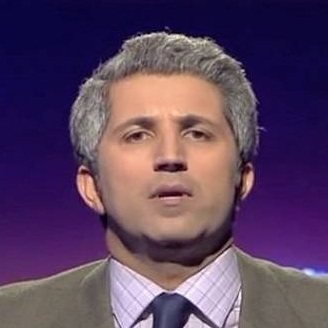
As part of its ongoing efforts to document serious violations of human rights and international humanitarian law arising from recent military aggression by the United States and Israel against Iran, the Organization for Defending Victims of Violence (ODVV) conducted an in-depth interview with Professor Alexander Azadgan, Professor of Business Studies and International Political Economy in Southern California. With extensive experience in analyzing conflict dynamics and psychological warfare, Professor Azadgan is widely recognized for his insights into the strategic implications of international conflicts and civilizational identity.
In this interview, he reflects on the deliberate targeting of civilian infrastructure, the structural limitations of current international media narratives, the existential threats posed by expansionist geopolitical projects, and the vital role of international law in seeking accountability.
The perspectives expressed in this interview do not necessarily reflect the official positions of the Organization for Defending Victims of Violence.
The summary of the interview follows:
What are the underlying strategic motives behind the recent attacks on civilian targets, such as the schools in Minab?
The targeting of civilian infrastructure and the tragic killing of children are deliberate tactics aimed at destroying the morale of a nation and delaying the reaction of its defending forces. This approach is not a miscalculation or mere collateral damage, but a calculated psychological warfare strategy that has been utilized previously in regions like Gaza, Lebanon, Syria, and Iraq. By attacking the most vulnerable members of society, the aggressors seek to paralyze the target population with grief and ultimately target the future of the nation itself.
How do you analyze the current media narrative and the framing of this conflict by Western officials and mainstream outlets?
Mainstream Western media frequently engages in information warfare, framing the situation as an “Iran war” to shift the blame onto the victim and obscure the reality of the aggression. In reality, this conflict should be recognized as a war waged by the United States and Israel against Iran and its ancient civilizational identity. Western leaders often employ moral posturing, claiming to be global saviors while simultaneously conducting military actions that devastate civilian populations and appropriate regional resources. The ultimate goal of this rhetoric is to manufacture consent among the global public by portraying the aggressors favorably while criminalizing those who are defending their sovereignty.
What are the broader geopolitical objectives driving Israel’s actions in the region, and how do they threaten regional stability?
The current military actions are tied to an expansionist strategy, often referred to as the project for Greater Israel, which poses an existential threat to the territorial integrity of multiple nations across the Middle East. This strategy relies on a gradual approach, turning up the temperature through sporadic attacks to wear down adversaries over an extended period. Furthermore, there are documented geopolitical plans aiming to fragment nations in the region into smaller, weaker entities. Iran currently stands as a primary obstacle to this hegemonic reconfiguration of the Middle East, making it a central target for these destabilizing efforts.
In the face of these severe violations, what practical steps can be taken to ensure accountability and defend civilian rights?
It is absolutely crucial to rely on the mechanisms of international law and engage in a sustained battle of persuasion in diplomatic forums and the United Nations. There must be ceaseless efforts to meticulously document all destruction and civilian casualties to build credible, comprehensive cases for the International Criminal Court and the Hague. The strategic focus should be on demanding full compensation for destroyed infrastructure and pursuing legal accountability for every civilian life lost. In tandem with these legal actions, a robust public diplomacy campaign utilizing alternative media platforms and independent analysts is necessary to bypass mainstream media blockades and effectively communicate the reality of the situation to the global public.
How important are internal dynamics, such as addressing economic issues and engaging with opposition groups, in strengthening the country’s position against these external threats?
A strong defense against external aggression requires a solid foundation of internal cohesion and economic integrity. Addressing economic challenges and corruption head-on is vital to preventing brain drain, restoring public trust, and encouraging the younger generation to remain and contribute to their country. Furthermore, when dealing with certain opposition factions—many of which rely on foreign support—it is effective to challenge them using international legal norms, thereby exposing their contradictions and lack of genuine democratic intent. Maintaining political independence while forging strategic economic partnerships will be key to navigating this crisis and securing a stable, prosperous future.