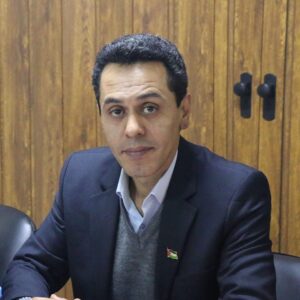
As part of its ongoing efforts to examine the legal and humanitarian implications of recent military aggression against Iran, the Organization for Defending Victims of Violence (ODVV) conducted an interview with Professor Emily Crawford, Professor of International Law at the University of Sydney and a specialist in international humanitarian law, international criminal law, and the law governing armed conflict.
Professor Crawford is widely recognized for her academic work on the laws of war, civilian protection, cultural property protection, and the legal regulation of the use of force under international law. She has authored and edited numerous scholarly works on international humanitarian law and has contributed extensively to legal debates concerning accountability, war crimes, and state responsibility.
In this interview, Professor Crawford discusses the legal standards governing attacks on civilians and civilian infrastructure, the principles of distinction and proportionality under international humanitarian law, state responsibility for unlawful acts, the legal status of cultural and religious sites during armed conflict, and the environmental consequences of attacks on industrial infrastructure. She also reflects on mechanisms of accountability under international law, including the International Criminal Court (ICC) and the International Court of Justice (ICJ).
The views expressed in this interview do not necessarily reflect the official positions of the Organization for Defending Victims of Violence.
The full transcript of the interview follows:
1. In the Minab school incident in Iran, where 168 children were killed, how should such an attack be assessed under international humanitarian law? What criteria help determine whether such cases constitute a serious violation of international law, rather than being treated as collateral damage?
Any attack under IHL needs to be assessed for compliance with the principles of distinction, proportionality, and military necessity. So, for an attack to be lawful under IHL, the target must be a military objective, defined under Article 52(2) of the 1977 Additional Protocol I as:
objects which by their nature, location, purpose or use make an effective contribution to military action and whose total or partial destruction, capture or neutralization, in the circumstances ruling at the time, offers a definite military advantage
Furthermore, any attack must meet the criteria of proportionality which under Article 51(5)(b) of the 1977 Additional Protocol I prohibits
an attack which may be expected to cause incidental loss of civilian life, injury to civilians, damage to civilian objects, or a combination thereof, which would be excessive in relation to the concrete and direct military advantage anticipated.
Under Article 85(3)(b) of the 1977 Additional Protocol I, “launching an indiscriminate attack affecting the civilian population or civilian objects in the knowledge that such attack will cause excessive loss of life, injury to civilians or damage to civilian objects, as defined in Article 57, paragraph 2 a) iii) is a grave breach.
Any attack that does not meet the test for proportionality would therefore be a breach of IHL and not an example of legitimate collateral damage.
2. In a situation where, in Iran, healthcare centers, hospitals, and access to medicine have been affected for years due to unlawful sanctions and have also been further damaged during unlawful attacks by the United States and Israel, how is state responsibility assessed under international law? What key legal elements are required to establish responsibility and ensure accountability in such cases?
The law of state responsibility provides that any act that amounts to a breach of international law and that can be lawfully attributed to the State entails the responsibility of the State. The relevant rules on States responsibility are found in the Articles on State Responsibility.
Under article 4 of ARSIWA:
The conduct of any State organ shall be considered an act of that State under international law, whether the organ exercises legislative, executive, judicial or any other functions, whatever position it holds in the organization of the State, and whatever its character as an organ of the central Government or of a territorial unit of the State.
It would then be necessary to determine whether the act in question was a breach of international law – such as an attack that amounted to a breach of IHL or the rules on the use of force. So what is needed primarily for establishing responsibility is attribution and breach (although there are other elements such as circumstances precluding wrongfulness, nationality of claims and exhaustion of local remedies).
In terms of accountability, there are several avenues, including bringing proceedings in the ICC or ICJ.
3. In the context of ongoing military and economic pressure on Iran, if actions are taken in strategic waterways such as the Strait of Hormuz, how can these actions be assessed under international law? Can they be examined within the framework of the right to self-defense under Article 51 of the UN Charter?
The relevant law regarding the Strait of Hormuz is the law of the sea, and the law of naval warfare. Following an initial armed attack, the relevant law to apply is the law on use of armed and armed attack under the UN Charter and customary international law. However, once hostilities have commenced, the relevant law is the law of armed conflict and the law of naval warfare more specifically.
4. If, during the course of conflict, civil records, medical files, or educational records in Iran are destroyed, what are the legal implications under international law? Can such acts be understood as harm to the social structure and future of civilian populations?
It would depend on the nature of the attack – civilian objects are protected from direct attack. If civilian records (say, kept in a town hall or other civic structure) medical facilities and educational facilities are deliberately attacked, this would be a war crime under IHL and international criminal law. However, if these objects were incidentally destroyed as part of a legitimate attack, it would be considered permissible collateral damage, unless the attack was itself disproportionate which would also be a breach of IHL.
5. Under international humanitarian law, how are attacks on cultural and religious sites in Iran—such as mosques, churches, synagogues, or historical landmarks—evaluated? What legal protections do these sites have, and under what conditions could targeting them amount to a serious violation?
These objects are protected both as civilian installations as well as cultural property.
Article 1 of the 1954 Hague Convention for the Protection of Cultural Property defines cultural property, for the purposes of the Convention, irrespective of origin or ownership, as:
(a) movable or immovable property of great importance to the cultural heritage of every people, such as monuments of architecture, art or history, whether religious or secular; archaeological sites; groups of buildings which, as a whole, are of historical or artistic interest; works of art; manuscripts, books and other objects of artistic, historical or archaeological interest; as well as scientific collections and important collections of books or archives or of reproductions of the property defined above;
(b) buildings whose main and effective purpose is to preserve or exhibit the movable cultural property defined in sub-paragraph (a) such as 01m in the event of armed conflict, the movable cultural property defined in sub-paragraph (a);
(c) centers containing a large amount of cultural property as defined in sub-paragraphs (a) and (b), to be known as “centers containing monuments
Article 4 of the 1954 Hague Convention for the Protection of Cultural Property provides:
1. The High Contracting Parties undertake to respect cultural property situated within their own territory as well as within the territory of other High Contracting Parties … by refraining from any act of hostility directed against such property.
2. The obligations mentioned in paragraph 1 of the present Article may be waived only in cases where military necessity imperatively requires such a waiver
Any deliberate attack against cultural property is a breach of IHL; however, if the cultural property is being used in such a way as to render it a military objective, it may be targeted in limited circumstances.
6. In some attacks on industrial and petrochemical infrastructure in Iran, concerns have been raised about environmental consequences such as air pollution, the release of toxic gases, and even acid rain. From the perspective of international humanitarian law and human rights law, how should such environmental harm be assessed? Can these consequences be considered violations of obligations related to the protection of public health and the environment during armed conflict?
Under current IHL, there is only one relevant provision – Article 35 (3) of Protocol I states that “It is prohibited to employ methods or means of warfare which are intended, or may be expected, to cause widespread, long-term and severe damage to the natural environment.” However, there is no right to public health’ in IHL like there is in IHRL – only prohibitions on direct attacks on health care workers, so incidental damage to the environment or health care would not be caught by existing IHL rules.