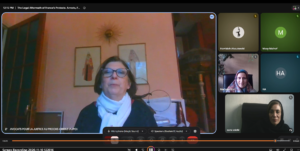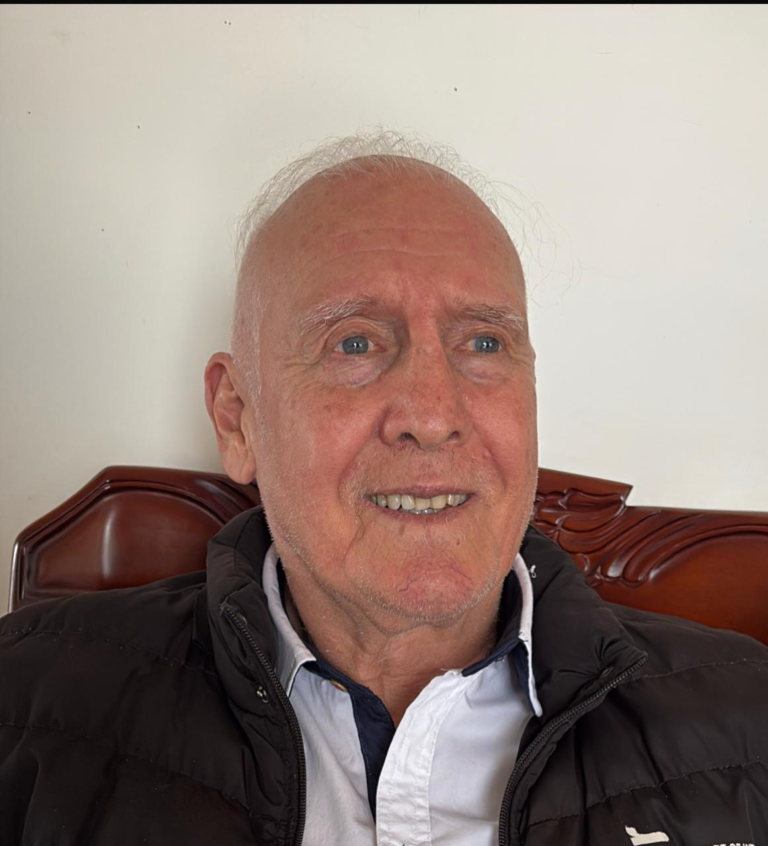
The Organization for Defending Victims of Violence (ODVV) conducted an exclusive interview with Dr. Carlos Santa María Rodríguez, a Colombian academic, author, and international political analyst, in November 2026, as part of its series of expert discussions on the human rights consequences of the U.S. and Israeli military aggression against Iran.
Dr. Santa María holds a PhD in Philosophy and Educational Sciences and specializes in social psychology. He previously served as Dean of the Faculty of Human Sciences at the University of Nariño in Colombia. His academic and professional work has focused on social sciences, international relations, power politics, and the role of the media in political developments. He is also an expert in Geopoder and the founder of the analytical approach known as Humanología.
The interview, titled “Power Politics and Human Rights: Civilian Protection and Accountability in the U.S.–Israeli War on Iran,” examined attacks against civilians, the humanitarian consequences of the war, international double standards, and the obstacles to holding those responsible for violations of international law accountable.
During the interview, Santa María described the attack on the Minab school as a war crime and called for the identification and prosecution of those responsible. Referring to the attack on a wedding celebration in southern Iran, recent strikes on Qeshm Island, and economic and maritime pressures, he also emphasized the consequences of these actions for the lives and fundamental rights of the Iranian people.
The Colombian analyst also criticized the performance of international media, the double standards of Western powers, and the limitations of international mechanisms in delivering justice. He stressed the importance of legal action, demands for reparations, and continued public awareness of the victims.
The views expressed in this interview are those of the interviewee and do not necessarily reflect the official position of the Organization for Defending Victims of Violence.
The full text of the interview follows.
1. Minab — Beyond the Investigation
Question: In September, UN investigators found reasonable grounds to believe that the U.S. attack on the primary school in Minab constituted a war crime. However, Washington has still not publicly released the full findings of its own investigation. What would real justice mean for the families of the children killed? What should the United States do, and what should we do now?
Answer: It was a war crime. There is no doubt about it, because the same location was struck three times in separate, nonconsecutive attacks. Therefore, Washington will neither acknowledge the evil nature of its actions nor compensate for something that is fundamentally irreparable: human life. However, if compensation were to take a financial form, it should exceed trillions of dollars, because this was a crime against the children of the entire world, whose innocence was embodied in these young lives. Real justice for the families would mean extraditing the commanders of the vessels from which the missiles were launched to the country that was attacked, or at least removing them from their military units and branches of service. Any other action, even an apology without providing at least some compensation, is simply hypocrisy.
There are several possible paths, and some are already taking shape: legal investigations and the imposition of penalties at the international level, both against those who ordered the crime, namely Trump and his associates, and against the military personnel involved. There should also be an international demand for compensation amounting to trillions of dollars, while emphasizing that even such an amount would be insignificant compared with the value of human life. We must continue to remember this tragic event every single day, because awareness is gradually growing among people across the region and the world that serial killers exist within governments such as those of the United States and Israel, particularly these two.
2. From Minab to the Wedding in Southern Iran
Question: You previously spoke about the attack on a wedding celebration in Bandar Kuhestak in southern Iran. In Minab, children were at school; in Kuhestak, families were celebrating a wedding. What do these attacks tell us about the human cost of this war, and how can international media be held accountable for the way they report, or overlook, such tragedies?
Answer: The deliberate and malicious attack on a wedding confirms that what happened in Minab was not a mistake but a brutal and blatant crime, just like many other crimes of the same kind. The real objective is to send a message: We are the ones who extinguish the lives of children, women, pregnant women, and civilians, to show you that if you do not follow our orders, you must suffer the consequences.This demonstrates a complete absence of humanity, feeling, conscience, and dignity. Their greed, envy, selfishness, and perversity place them at the lowest level of the human scale.
The “Mass Media of Disinformation,” which I believe is the proper name for these propaganda tools disguised as news programs, documentaries, and information outlets, serve two purposes at the same time: first, generating revenue and increasing wealth; and second, spreading misinformation or concealing facts that might encourage people to question how their governments treat society. Therefore, in my view, since a large proportion of these media outlets are owned by Zionist elites, they have so far faced no real obstacles to openly lying to or deceiving their audiences. Nevertheless, accountability will be unavoidable.
3. Qeshm, the Strait of Hormuz and Economic Pressure
Question: Recent U.S. strikes on Qeshm Island, together with the tightening blockade of Iranian shipping and growing tensions involving oil tankers in the Strait of Hormuz, have created new risks for southern Iran. Beyond military and economic calculations, what does this pressure mean for the safety, livelihoods, and fundamental rights of ordinary Iranians?
Answer: This situation places immense pressure on millions of people who simply want to live normal lives, be with their families, and enjoy the resources and benefits their country can provide. However, they are deprived of this possibility by restrictions that prevent the entry of medicines, medical treatments, technology, essential materials and equipment, food, and other goods. This situation is also accompanied by the malicious conduct of international trade and banking institutions.
This, too, is a war crime.
Nevertheless, scientific and technological advances in the military field have also contributed to progress in medicine, agriculture, education, and production, making life somewhat less difficult. In this regard, we must highlight the resilience of the Iranian people and their system of governance. Together, they have shown the world a trilateral relationship between Russia, China, and Iran. This gives people a sense of hope and real progress despite the immense sacrifices and hardships they have endured. From the perspective of Humanología, this is an essential characteristic that other countries, even those considered major Western powers, do not possess.
4. The Killing of Iran’s Leadership and International Double Standards
Question: The war has also seen the killing of Iran’s Supreme Leader and several senior officials. What kind of precedent does the use of military force against the leadership of another country set for the international order? Do you see double standards in how such actions are judged when powerful countries are responsible?
Answer: From a human perspective, what exists in the West is the use of a category known as “deep intention.” This means concealing their perversions behind arguments that have no real foundation, lack logic, and are driven by emotion and hatred. This undermines any attempt to provide a rational explanation. This is the basis of double standards and the expectation of escaping accountability. If an action benefits the elites who control their countries, rather than the people of those countries, anything can be distorted through the media.
The lies about reaching the Moon and a president speaking to astronauts by telephone, as well as what I consider the self-staged attack on the Twin Towers, form the basis of a kind of fictional cinema in which their commandos always emerge victorious, even though in reality they are usually defeated. Therefore, assassinating prominent figures or scientists, as well as killing defenseless civilians, is the only way they can demonstrate supposed successes. The only certainty is that their cowardice allows them to advance only when a people does not show strength and resistance. This demonstrates to the world and to sovereign countries under attack that resistance, even offensive resistance if necessary, becomes a path toward the long-awaited peace that everyone desires.
5. War Crimes, Impunity and the Pursuit of Justice
Question: In an earlier interview, you emphasized the importance of identifying those responsible for the attacks against Iran and seeking their extradition. Given the findings concerning Minab and the wider impact of the war on civilians, what practical steps could help move these cases toward criminal accountability? Can UN mechanisms and national courts make a difference when powerful governments resist investigation?
Answer: UN mechanisms and national courts are different. The former face endless vetoes, competition between power blocs, and the absence or indecision of certain countries. National justice, on the other hand, upholds national sovereignty as its guiding principle. The United Nations is absolutely useless and generally serves only as a forum for reporting violations of the universal human rights of peoples subjected to aggression, usually to deaf ears. Therefore, what matters most is expecting concrete action, not merely declarations.
Only when the United States and Israel are punished for the killing of 428 children in the recent attacks can we speak of a coherent and consistent response. The “international community” is an empty expression because it does not actually exist, and appealing to it is ineffective. What matters is that the rulings and decisions of a country’s national judicial system be submitted to international bodies, such as the International Court of Justice, Interpol, and other similar institutions, to send a clear message, even though there is no guarantee of the outcome.
The important thing is for information to be continuously shared through our own media, gradually reaching wider sections of the population. This helps raise public awareness and build the collective strength needed to move forward. Above all, what matters is a spiritual truth that sustains the peoples of the multipolar world: the law of compensation, which means punishment for wrongdoing and rewards and blessings for the worthy, always manifests itself, even at unexpected moments.