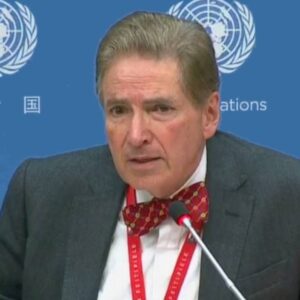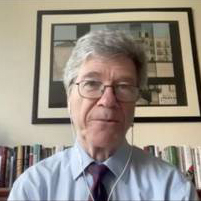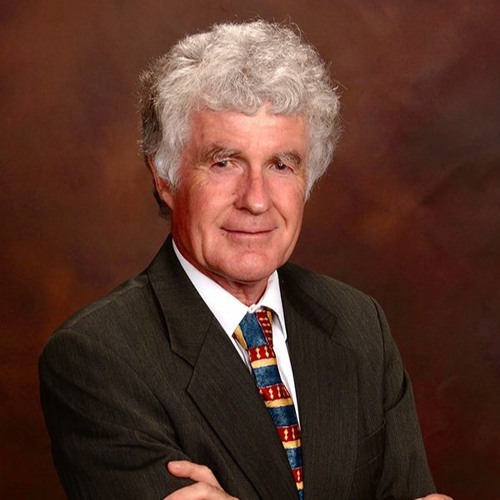
An exclusive interview was conducted with Professor Joseph Oliver Boyd-Barratt, in which he discusses the role of mainstream media in biased coverage and support of Western policies in the Israel-Iran conflict, calling this a violation of the principles of the United Nations Charter. He emphasizes the illegality of Israeli and American attacks and warns that by ignoring the facts, the media helps normalize widespread crimes against the people of Palestine and Iran. The key point he raises is the urgent need to reform international institutions and enforce deterrent measures to hold perpetrators accountable for these crimes.
Between June 13 and June 24, 2025, Israel—with direct support from the United States—launched a sustained twelve-day military campaign against the Islamic Republic of Iran. This unprecedented act of aggression resulted in the deaths of more than 1,100 civilians, including 132 women and 47 children, and left over 5,700 injured. Civilian infrastructure such as hospitals, residential buildings, water and energy systems, pharmaceutical facilities, and Red Crescent ambulances were deliberately targeted. The attacks represented one of the gravest violations of international humanitarian law in recent memory.
Meanwhile, this military campaign stood in stark contradiction to the fundamental principles of the United Nations Charter, particularly Article 2(4), which prohibits the threat or use of force against the territorial integrity or political independence of any state.
To analyze how global media institutions have framed this attack and to explore the broader implications for international justice, the Organization for Defending Victims of Violence (ODVV) conducted an interview with Professor Joseph Oliver Boyd-Barrett, a distinguished scholar of media, empire, and international communication.
Professor Boyd-Barrett is a leading authority on media and global power structures, with decades of research on international communications, war reporting, and news agencies. His publications include influential works such as “Media Imperialism”, “The Globalization of News”, “Le Trafic Des Nouvelles”, and “Contra-Flow in Global News”. He has served as North American Editor of Global Media and Communication and held advisory roles on several major academic journals in media studies
The full interview text is available below:
1. In light of Israel’s recent military aggression against Iran—resulting in the death of over 1,100 civilians and the destruction of non-military infrastructure—how do you assess the role of mainstream media in framing this conflict? To what extent have media outlets contributed to legitimizing or concealing violations of international law?
As a communication and media expert, and as one who has examined media coverage of US-Iranian-Israeli relations over a number of years I have long formed the conclusion that mainstream media coverage in the US frames the conflict almost entirely in ways that are favorable to US foreign policy interests. The single most egregious example of this is how mainstream media routinely give US spokesmen the credit for being serious whenever they charge Iran and Iranian uranium enrichment as constituting a form of nuclear “threat” to the region, ignoring the facts that Iran has never had a nuclear weapon, that there is very good evidence that Iranian leadership is opposed to possession and use of nuclear weapons, that Iran was an early signatory to the nuclear non-proliferation treaty and that almost without exception it has ever since (up to last month) permitted IAEA entry for the purposes of routine inspections, and that it is perfectly legal for Iran to enrich uranium for peaceful purposes to any level of enrichment; WHEREAS neighboring Israel possesses what are believed to be in excess of 100-200 nuclear warheads, that Israel acquired its weaponry illegally, that US aid to Israel is therefore illegal, that Israel has never signed the nuclear non-proliferation treaty, that Israel’s nuclear weapons facilities are never subject to external inspection.
2. Israeli and U.S. officials have invoked Article 51 of the UN Charter to justify the attacks. However, critics argue this interpretation circumvents Article 2(4) and the prohibition of force against sovereign states. From your perspective, how does this legal narrative intersect with Western political messaging and media discourse?
The attacks by the US and Israel are utterly illegal. They are based on the demonstrably false premise that Iran, not having a single nuclear weapon, IS a nuclear “threat,” whereas Israel, with 100-200 nuclear warheads somehow is NOT a threat, a false premise that was further and deceitfully buttressed by the IAEA itself declaring, on the basis of extremely questionable evidence, with reference to a dispute resolved over a decade ago, that Iran was “out of compliance.” The intensity if IAEA and western intelligence surveillance of Iran’s nuclear capability is such that it would be impossible for Iran to have developed a nuclear weapon without this being known to the international community. The US and Israeli attacks constitute a major war crime, made even worse by the fact that Iran and the US were engaged in peace negotiations at the time.
3. In recent years—particularly during the recent attacks on Gaza—Israeli officials have openly endorsed genocidal intent against civilians, even boasting about killing children waiting in line for humanitarian aid. From the perspective of ideology and media representation, what function does such discourse serve in normalizing atrocity? And how should the international community respond to this level of moral degradation in the official rhetorics?
The Israeli genocide is possibly the greatest evil our world has experienced since the Nazi holocaust. Mainstream media in the West have always been protective of Israel despite copious evidence that its relationship to the Palestinian people is at best a relationship of colonizer and colonized and that within the territory of Israel the State practices apartheid, which is illegal. These media have woken up to the reality of genocide far, far too late, and this is inexcusable. I recognize that the UNGA and the UNSC and their various agencies have taken measures – so far almost completely ineffective – to serve justice to the Palestinian people. The UN must provide far more robust material support, by coercive means, if necessary, to protect the people of Palestine, and to aggressively investigate the failings of its own agencies, as in the case of concerns about direct complicity between members of the IAEA, the occupying power in Palestine and its superpower enabler, the USA.
4. Israel’s deliberate destruction of hospitals, water systems, pharmaceutical facilities, and Red Crescent rescue vehicles in Tehran follows a pattern witnessed in Gaza. Strategically and communicatively, what objectives are served by targeting humanitarian infrastructure, and how are such acts presented or obscured in global media narratives?
The served objectives relate to a Zionist agenda for the expansion of Israel into the territories of its neighbors including Lebanon, Syria, Iraq, Jordan and Egypt. To this end, Israel has long opposed and decimated the ranks of Hezbollah militia in Lebanon and Syria and Hamas in Gaza, that have also supported Iran and received support from Iran (which nonetheless has no executive power over them). Israeli objectives also relate to a struggle by Israel for regional supremacy over other regional contenders, most especially Iran. Saudi Arabia has expressed a desire for normalization with Israel and has largely been a proxy of the US, at least until the emergence of the BRICS powers. Turkey is a NATO country that may protest Israeli war crimes but continues to supply Azeri oil to Israel through its energy hubs, and that, like Israel, has a positive relationship with Azerbaijan, and has aided Israel by seeking the breakup of Syria, and continues to attempt to straddle totally conflicting interests to its own great discredit. The US has largely supported Israeli objectives seeing in its proxy an instrument with which it can sustain imperial power in the world’s single most important center of energy supplies, in part with a view to containing the influence of China that depends to a significant but not overwhelming degree on Iranian energy products.
5. How do you interpret the systemic use of starvation and deprivation—particularly in Gaza, where over 90% of the population now suffers from acute food insecurity—as a weapon of war? In your view, what practical mechanisms exist within the UN system (e.g., the Human Rights Council, ICC, ICJ) to hold Israel or its allies accountable for sustained breaches of international humanitarian and criminal law? What are the current limitations and possible reform paths?
All “practical” measures appear to have been tried. The UN must mobilize coercive power in circumstances such as these.
6. Considering the United States’ role as a co-belligerent in these attacks—through intelligence sharing, joint targeting, and weapons supply—is there any legal basis for holding the U.S. internationally accountable for complicity in unlawful uses of force? What precedent or legal pathways exist to address such forms of state collaboration?
Power trumps legality. The only ways forward are the development of multipolarity, the reform of the UN structures, and the reassertion of UN authority over the “rules-based” order.
7. Some narratives now frame figures like Donald Trump—whose policies enabled mass violence and impunity—as potential nominees for the Nobel Peace Prize. How do you assess this contradiction, especially in light of Trump’s support for Israeli military campaigns and his role in dismantling international legal norms?
This is a farce that deserves no further comment.
8. Finally, the U.S. government increasingly avoids using standard international legal terminology, opting instead for phrases like “rules-based international order” while ignoring binding international obligations. How do you interpret this shift in discourse, and what consequences does it have for the authority and effectiveness of international law?
The foreign policy of the US government since the collapse of the Soviet Union has been to assert US dominance over the security architecture of the entire planet. This policy has come under extreme pressure, principally from the time of China’s accession to the WTO in 2001 and China’s rapid economic growth surpassing that of the USA in terms of purchasing power parity, some years ago, but also from the rejection by Russian President Vladimir Putin of the subservient neo-liberal policies imposed on Russia by the West under the presidency of Boris Yeltsin. The US is fighting back, principally (and currently) along three fronts: a war with Russia over US proxy Ukraine; a war with Iran over US proxy Israel; and, above all, a war with China over US proxy (and still part of China), Taiwan.