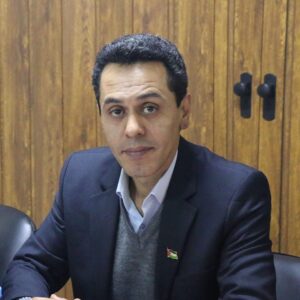
In the aftermath of unprecedented military strikes between Israel and Iran, many global voices have sought moral clarity amid the chaos of conflict and contested narratives. Dr. Philip Hopkins—a historian of religion and culture with a deep academic and personal connection to Iran—offers a faith-based perspective rooted in scripture, compassion, and justice.
In this interview with the Organization for Defending Victims of Violence (ODVV), Hopkins reflects on the ethical implications of targeting civilians, the moral responsibilities of governments and faith communities, and the role of spiritual conviction in confronting suffering and injustice. His responses draw from biblical teachings, personal experience, and a commitment to prayerful engagement with global affairs.
While Dr. Hopkins’s views offer a unique religious and cultural lens, the perspectives expressed in this interview do not necessarily reflect the official positions of the Organization for Defending Victims of Violence.
The full transcript of this important exchange follows:
1. As someone with deep knowledge of religious traditions and moral teachings, how would you evaluate the recent Israeli airstrikes on civilian targets in Iran, including hospitals, and cultural centers, in terms of basic ethical and spiritual values?
The war between Iran and Israel caught most people off guard including myself. I love Iran and the Iranian people. The homes of some of my former students were damaged by airstrikes and some of their children injured, so I am emotional about the strikes. It makes me feel really sad that my students got hurt. I pray for them. Part of any just war is to avoid civilians and distinguish them from combatants. The only ‘crimes’ my friends committed were being poor and therefore having to live in industrial areas.
2. In your view, how should faith communities around the world—especially Christian and interfaith institutions—respond to such acts of violence, particularly when they target not only lives but also sacred spaces such as mosques, churches, and humanitarian infrastructure?
I do not feel comfortable speaking about other faiths, but for Christians, Romans 13 is a main text used when addressing submission to government. Using Romans 13 as his base, retired American pastor John Piper explains that God selects all regimes, including administrations that are evil. Piper uses Jeroboam in 1 Kings 12.15, Nebuchadnezzar in Jeremiah 27.6, and Pilate in John 19.10 as examples. In each case, the Lord was the one who put and kept the ruler in power even though they were evil. It does not make sense to me for God to allow evil rulers to stay in power, but God always knows best, and God did not ask my opinion.
Jesus Christ himself in Matthew 5.38-48 states that one should love and pray for their enemies. That does not mean the Bible does not provide exceptions and support the breaking of laws. In dealing with greater Iran itself, the Bible gives several examples.
- Daniel praying to God after an official governmental edict that stated one could only pray to the king (Daniel 6.6-10).
- Shadrach, Meshach, and Abednego not bowing to an idol (Daniel 3.9-18).
- Queen Esther approaching the king without permission to save her people (Esther 3-5).
- The Maji not obeying King Herod and telling him where the baby Jesus was located (Matthew 2.1-12).
The biblical citations mentioned above are examples of peaceful and non-violent actions. The seriousness, magnitude, and degree of the offense combined with the ability for transparent and real change should be considered before any acts are committed. Christians should desire justice to be accomplished as much as possible in a non-violent and peaceful manner. Christians who speak the truths of Scripture in the spirit of Jesus Christ, understand the nuances of different viewpoints, and act justly with sympathy when discussing them can allow for issues to be addressed in a truthful, peaceful, and accurate manner.
3. Shifting focus from Iran to Palestine: The use of starvation as a weapon of war—particularly in Gaza, where over 90% of the population now suffers from acute food insecurity—has reached horrifying levels. Israeli officials have even publicly boasted about killing civilians, including children, while they waited in line for humanitarian food aid. How do you assess the ethical and theological implications of such policies, especially in light of foundational religious teachings on the sanctity of life and the obligation to protect the vulnerable?
Hamas has Israeli captives. They are civilians. Hamas should not have attacked civilians. Hamas should release them. However, there is no excuse to starve the Palestinian population to get the Israelis back, even if the Palestinians are sympathetic to Hamas. Christians should never support repaying a wrong with another wrong. Outside of maybe Atheism or Nihilism, starvation of a population crosses all religious theological and ethical barriers. The Bible prohibits punishing children for the sins of the parents. The Palestinians Israel is starving did not attack Israel or take Israelis captive. Starvation of a population is never a solution.
4. Given your scholarly focus on the cultural interface between Iran and the West, how do you interpret the silence—or even complicity—of many Western governments and media institutions in the face of Israeli attacks on Iran? What does this reveal about the moral credibility of Western engagement with human rights?
Very few people in the United States believe the traditional media anymore. People are listening more to longer form media like podcasts. The question why is for another day. Perhaps I am cynical, but I do not believe the moral agency of the West is much different than the moral agency of the East. There seems to be silence in the East and in the West. The questions that I believe should be asked are, “Where does moral credibility arise?” “Does it come from the state or a power greater than the state, like God?” If it only comes from the state, that is going to be a problem as there are many states with many opinions, and those opinions change with different leaders. If it comes from God, then what God? We all believe in a type of God; some believe God is the state, some believe it is a human leader. Others believe God is outside the state. Leaders in the West and East need a moral authority outside themselves: they need Jesus Christ. Jesus Christ provides the moral clarity.
Since the lack of moral clarity seems like a global phenomenon within government and there is fear that Iran will gain a nuclear weapon, if I were the Iranian Government I would try to quench that fear somehow. I think there are three ways this could be done. First, I think full diplomatic relations between the United States and Iran should be restored so that more dialogue can occur and trust can be earned. Second, I think all parties should revisit what former President Mohammad Khatami proposed during his tenure as president of Iran, especially with the nuclear issue but other issues as well. Now that 20 years has gone by, it seems there was wisdom to what he stated. Third, the Iranian government should be more open towards Christianity. This would show their moral superiority over secular nations in the West who have increasingly attacked the Christian faith.
Regarding human rights, I do not like the term. Everything we have is from God. If it were not for Christ dying and raising to life again for all those who confess their sins and put their faith in him, we all would deserve death and hell. Anything besides death and hell is grace. We all fall short of God’s glory. This includes governments and how they treat people. I think it is fine for countries to criticize other countries, but not to admit their own failures seems hypocritical. Countries should first worry about their own records on how they treat the people in their care and begin to rectify wrongs. For all its flaws, the United States is open about its own past failures and is trying to make amends. The way governments treat people goes back to the moral clarity issue or lack thereof. It also leads to the answer to your next question.
5. Finally, some political narratives in the West have floated the idea of nominating figures like Donald Trump—despite his support for Israeli military campaigns and dismantling of international legal norms—for the Nobel Peace Prize. How do you assess the implications of such discourse on the credibility of international law and moral accountability?
The Bible calls me to pray for leaders in government whether I support them or not. I pray for President Trump as he is my president, just like I prayed for Presidents Biden, Obama, Bush (both of them), and Clinton, and I did not vote for all of them and did not agree with all their policies. (I was not a Christian when Reagan, Carter, Ford or Nixon were presidents.) I pray for the leadership in Iran and Israel, too. I pray God opens President Trump’s eyes and causes him to fall more in love with God through Jesus Christ. I pray, if President Trump has not already, that he becomes a Christian; that he believes in Jesus Christ being 100% man and 100% God, that Christ was born of a virgin, came to earth and lived a sinless life, died on the cross, was buried, and three days later rose from the dead to pay the penalty of sin for all those that seek repentance and place their faith in Christ. I also pray that if President Trump is a Christian that he prays to God, reads his Bible daily, and deepens his walk with Christ through going to church, being around Christians, and Scripture meditation. I pray God gives him wisdom to lead justly and righteously with love and sympathy. He is one of the most important and powerful people in the world. Regarding whether or not President Trump should receive the Noble Peace Price – if he can bring peace to the Middle East, especially peace between Israel and Iran, I think it is something that should be considered.
6. Israel’s systematic targeting of Iranian civilian scientists and medical responders echoes the long history of violence against the innocent in the name of national security. In your view, how can societies of faith and conscience reclaim moral agency in holding perpetrators accountable?
While I am not sure all the scientists who have been targeted are civilian, the greater point that innocents have been killed is something to address. What concerns me most is not whether or not Iran has nuclear capacity – that debate has gone back and forth in Iran since the time of the Shah, and early on in the Islamic Republic its leaders were not so keen on being nuclear – what concerns me is that the United States is not a society of faith as traditionally understood: the United States is a secular nation with a Christianized background, soon to become a post-Christian society. I believe for there to be moral clarity; there needs to be spiritual awakening in the United States and across the world. Moral clarity only comes when there is an absolute standard followed – a plumb line – a guideline outside of oneself, outside of pragmatism, outside of pragmatics, outside of financial or political gain. I believe this standard is found in the clear teachings of the Bible exemplified through the life of Jesus Christ.
7. As a historian of modern Iran and its encounters with Western religious actors, do you see any relevant lessons from past patterns of intervention and resistance that may shed light on the current conflict?`
Prior to World War II, the United States was not as involved in Iran’s affairs as other countries – in certain ways Americans were appealing to Iranians as Iranians considered them impartial outsiders, friends of the Iranians who did not meddle in internal affairs. Most American governmental involvement prior to this time came as a result of American missionary requests. Combined with cultural superiority becoming an important doctrine in Western ideology, Western Christians joined it with an eschatological belief of Christ’s return. Missionaries believed their responsibility was to share the gospel and help inaugurate Christ’s kingdom on earth, which led them to build Western schools and hospitals and ‘improve’ (Westernise and modernise) Iranian society, as well as proclaim the gospel. The advancement of the ‘social gospel’ among some more theologically liberal missionaries of the 1960s and 1970s, with its focus on the betterment of life, sometimes over the ‘evangelical gospel’, with its emphasis on spiritual conversion, only added to this idea. (As an aside, this is one reason why the Iranian educational system is like the American system over the European one. American missionary Samuel Jordan who spent 40 years in Iran focused on education is considered by some as the father of Iran’s modern day educational system.) The Iranian elite, in return, absorbed the idea of progress into a nationalism that imagined the American Government, in part because of the missionaries’ activity, supporting a transformation of Iran into a freer society. Kamyar Ghaneabassiri notes:
[The Christian missionaries] labored in Persia to improve the educational, medical, and social conditions of the country, and so earned the affection and admiration of Persians for Americans and, in turn, for the United States. The image of the United States which they [the missionaries] created both explicitly . . . and implicitly . . . fostered the belief among Persians that America was sympathetic to their national aspirations for freedom and independence.
For all the flaws of the Pahlavi government, by the end of its tenure, there were only around 500 Muslims in Iran who converted to Christianity. Now Iran has one of the fastest-growing Christian populations in the world. If I were the Islamic Republic of Iran, I would open the doors to Western Christian missionaries and Christianity. It would: 1) lead to greater trust from Western countries and more dialogue 2) perhaps lessen the spread of Christianity in Iran. Now, I do not want the latter, but that is not the question you asked.
8. In recent years, Western narratives have increasingly replaced the language of international law with vague references to a “rules-based international order.” From your perspective, what are the risks of such discursive shifts for global ethics and genuine justice?
This is not just Western narratives. It is Eastern narratives, too. In an increasingly globalized society, the lines between West and East are blurred and therefore terms “Western” and “Eastern” are becoming irrelevant. The more important question is where are these narratives coming from? Why are the shifts happening? I believe this is because there is no moral clarity. Secularism determining moral absolutes is a proven failure. The uniqueness and distinctiveness the Lord has given all ethnicities from all nations allows us to learn and grow from interaction with one another, especially as technology advances and the world thus becomes smaller. If the United Nations could capitalize on this and show the beauty and unity of diversity of cultures perhaps that could help and there could be more worldwide alignment.