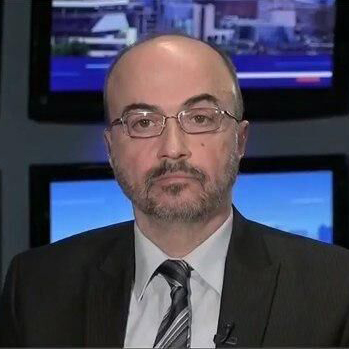
As part of its ongoing effort to document serious violations of human rights and international humanitarian law arising from recent military actions by the United States and Israel against Iran, the Organization for Defending Victims of Violence (ODVV) conducted an in-depth interview with Robert Fantina.
Robert Fantina is an American-Canadian author, journalist, and human rights activist known for his work on international law, social justice, and opposition to war and militarism.
In this interview, Fantina offers a critical perspective on the humanitarian consequences of combined military and economic pressure on Iran, including the impact of sanctions, attacks on civilian infrastructure, and environmental damage. He discusses the legal implications of these actions under international law, examines the limitations of existing international mechanisms in ensuring accountability, and reflects on the role of civil society in raising global awareness and pursuing justice.
The interview also explores broader issues such as the targeting of essential infrastructure, access to healthcare and education, and the environmental consequences of attacks on industrial facilities. Fantina highlights the importance of international legal frameworks while acknowledging the political challenges that often hinder their effective implementation.
The perspectives expressed in this interview do not necessarily reflect the official positions of the Organization for Defending Victims of Violence.
The full transcript of this important exchange follows:
1. In Iran, the combination of decades of unfair sanctions and recent attacks has worsened existing difficulties in access to medicine, healthcare, and even education. In your view, can this combination of targeted sanctions and the destruction of civilian infrastructure be seen as a deliberate form of pressure on the population?
These cruel measures taken by western governments are a form of collective punishment, and are therefore a violation of international law. The United States and the leaders of other governments will say that they are being done to punish Iran for human-rights violations, yet they are willing to overlook the extreme human-rights violations being committed by Israel and the United States. Medicine and healthcare are vital for existence; Article 25, Section 1 of the Universal Declaration of Human Rights states, in part, the following: “Everyone has the right to a standard of living adequate for the health and well-being of himself and of his family, including food, clothing, housing and medical care and necessary social services….”
Article 26 is also relevant; Sections 1 and 2 of this Article read as follows:
Section 1: “Everyone has the right to education. Education shall be free, at least in the elementary and fundamental stages. Elementary education shall be compulsory. Technical and professional education shall be made generally available and higher education shall be equally accessible to all on the basis of merit”.
Section 2: “Education shall be directed to the full development of the human personality and to the strengthening of respect for human rights and fundamental freedoms. It shall promote understanding, tolerance and friendship among all nations, racial or religious groups, and shall further the activities of the United Nations for the maintenance of peace.”
When any government deprives a population, or a subset of a population, of these rights, they are in violation of international law.
Yet U.S. President Donald Trump, along with the Israeli Prime Minister, Benjamin Netanyahu, has stated that one of the goals of their war against Iran is to ‘assist’ the population in overthrowing the government. They hope to do this by making conditions so desperate for the Iranian population that it will accede to their wishes. They do not understand the Iranian people or the Iranian culture.
2. When civilian infrastructure in Iran—such as hospitals, schools, and service facilities—is destroyed as a result of U.S. and Israeli attacks, what practical mechanisms exist at the international level to ensure accountability, condemnation, and compensation?
The United Nations has proven that is it unable to prevent these atrocities, or hold accountable the people responsible for them. The Security Council is the U.N. body that can act, but with the U.S. having veto power, that has not been, and is not now, effective. The International Criminal Court (ICC) and the International Court of Justice ICJ) can act, despite the fact that the U.S. sanctions individual members of those courts, preventing them from being able to travel or even use their credit cards.
The most effective measures are sanctions against these criminal nations and their leaders. All nations should cease trade and military agreements with the U.S. and Israel; while suspending all trade may not be feasible, since many economies rely on U.S. trade, it can be reduced. We are seeing now many European countries increasing trade and other alliances with Russia, China and India, and this must continue. Also, U.S. and Israel leaders, and leaders of other countries in violation of international law, should not be welcomed into any nation that respects such law.
3. Given the continuation of military and economic pressure on Iran, some analysts argue that strategic locations such as the Strait of Hormuz could be used as a deterrent tool. In your view, to what extent can such actions be justified within the framework of self-defense?
The U.S. and Israel have used whatever they have at their disposal to attempt to destroy Iran. The disproportionate number of Iranians who have died in this war compared to the number of Israelis and U.S. citizens is great because the Iranian government does not target civilian populations; the Israeli and U.S. governments do. The Iranian government is well within its rights to use the Strait of Hormuz in a manner that will protect and benefit Iranian citizens. Closing the Strait of Hormuz has already had global economic consequences, and those consequences, even if the Strait is opened today, will reverberate for months, if not years. Trump is apparently willing to destroy the world economy in his effort to bring down the government of Iran. He may succeed in ‘accomplishing’ the former, but his goals for Iran are completely unrealistic.
4. Considering the events in Iran—from civilian casualties to broader social and economic impacts—what practical actions can NGOs and human rights actors at the global level take to ensure that these realities are better recognized and that accountability is pursued?
Because international institutions have been unable to act against these severe and blatant violations of human rights and international law, and most government leaders are willing to ignore them, NGOs offer the best alternative to increase the worldwide recognition of these atrocities, and pursue accountability. Members of NGOs, of course, risk their lives to assist suffering people and publicize what the world should see. NGO members must speak publicly, in person and particularly on social media, so the average person, wherever they may be in the world, can see what is happening in Palestine, Iran and Lebanon. NGOs must encourage action, in peaceful protests and at the ballot box, to end these horrors and assure that those responsible for them are held accountable.
5. In the recent attacks on Iran, the targeting of industrial and petrochemical facilities has led to air pollution, environmental damage, and serious concerns about public health. From the perspective of human rights and international law, how should such actions be assessed? What mechanisms exist to pursue them as violations of the rights of civilians?
The U.S. and Israeli governments have no regard for human rights, within their own borders or globally. These industrial and petrochemical facilities are required for the Iranian economy, and are used safely to benefit the people of Iran. When they are bombed, all safety mechanisms are, of course, damaged or destroyed, causing widespread environmental damage, including air and ground pollution. Such actions are additional efforts by the U.S. and Israeli governments to punish the people of Iran for daring to overthrow the U.S.-installed government in 1979, and cause them to be in such desperate circumstances to overthrow their current government.
Again, since the United Nations Security Council is hampered by U.S. veto power, the ICC and ICJ must act. This requires some nation to present a case, as South Africa did against Israel, accusing it of genocide in Palestine. Some world leader must be willing to challenge U.S. hegemony, and take the risks that are inherent in ever challenging the U.S., and which are much greater now with the current administration. But history will judge harshly those who did not act to protect human rights and adhere to international law. And world leaders must recognize that, regardless of their actions, they are in no way protected from the erratic actions of the current U.S. president.