Introduction
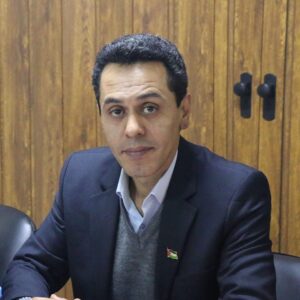
As part of its ongoing efforts to document humanitarian and legal concerns arising from recent developments in Iran, the Organization for Defending Victims of Violence (ODVV) conducted an exchange with Mr. Cyril Ritchie, a senior figure within the Conference of NGOs in Consultative Relationship with the United Nations (CoNGO). He is a longstanding leader in the international NGO community and a senior representative within CoNGO. With decades of experience working alongside the United Nations system, he has played a key role in strengthening civil society participation in multilateral processes and promoting collaboration among ECOSOC-accredited organizations.
This exchange highlights the role of civil society organizations in navigating UN mechanisms, particularly in contexts where formal international processes face political and structural limitations. The exchange highlights practical pathways for NGO engagement, advocacy, and accountability efforts within the UN system.
The perspectives expressed in this interview do not necessarily reflect the official positions of the Organization for Defending Victims of Violence.
The full transcript of this important exchange follows:
1. From your perspective, how can ECOSOC-accredited NGOs collaborate to explore the feasibility of civil society–led accountability initiatives in situations where formal international mechanisms face limitations?
CoNGO encourages ECOSOC-accredited NGOs, above all those that are members of CoNGO, to collaborate on accountability and other initiatives. The initiative should primarily come from individual NGOs with competence in the field involved, who should use the ECOSOC consultative status list to seek out potential partners or allies. Even if “formal international mechanisms face limitations” we must work with them to boost multilateralism, and in particular to foster using the United Nations System to whatever extent is “politically” possible.
2. What steps can organizations such as ODVV take to ensure that concerns related to the protection of civilian infrastructure are effectively raised within UN forums, including the General Assembly? And how can NGOs engage with relevant stake holders to support accountability efforts through legal or advocacy avenues?
NGOs, individually and collectively, can and must use their consultative status to speak up
(as advocates for justice and the implementation of international law, most certainly of international humanitarian law) in all relevant UN fora, above all the Human Rights Council. However, you certainly know that NGOs have no formal access to the UN General Assembly, and many authoritarian governments regularly resist (publicly and/or behind the scenes) any efforts to open up space for NGOs vis-à-vis the GA.
3. In the current climate, there is concern that political pressures may affect the consultative status of certain NGOs. How can networks such as CoNGO provide practical support mechanisms to help safeguard the consultative standing of member organizations?
I think it would be true to say that “political pressures affect the consultative status of NGOs” every month, sometimes every day. And have done for many years. The above remark on the GA is just one example. We see “political pressures” in regard to NGO accreditation to many UN Conferences or to NGO speaking rights. However, NGOs can also exercise “political pressures” by lobbying governmental missions to the UN, not least to remind some more difficult governments that they need to listen to competent NGOs which have grass-roots and operational knowledge, and which reflect the concerns of the people (to whom – in theory in some cases – governments are responsible).
CoNGO is constantly – but, to get results, often discreetly – using its almost 80-years’ experience and its standing vis-à-vis the UN System “to help safeguard the consultative standing of member organizations”.
One of CoNGO’s advantages is that it works across all UN entities, and has great knowledge of good practices throughout the System, enabling us to advocate – again, often discreetly – for their extension and multiplication.