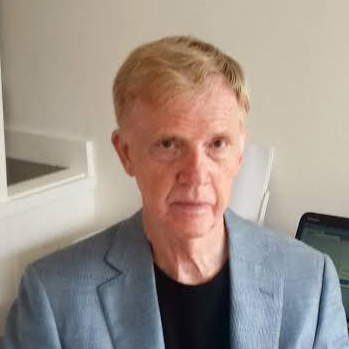
As part of its ongoing international efforts to document serious violations of human rights and international humanitarian law arising from recent military actions against Iran, the Organization for Defending Victims of Violence (ODVV) conducted an in-depth interview with Ambassador Peter Ford.
Ambassador Ford is a former British diplomat who served as the United Kingdom’s Ambassador to Syria and Bahrain. Following his diplomatic career, he worked with the United Nations Relief and Works Agency (UNRWA) and has remained actively engaged in Middle Eastern affairs, often providing critical perspectives on Western foreign policy and military interventions in the region.
In this interview, Ambassador Ford offers a candid analysis of how Western media narratives shape global perceptions of the recent attacks on Iran, including incidents involving civilian casualties, damage to infrastructure, and the broader humanitarian impact. He reflects on the role of language, selective coverage, and double standards in influencing public opinion and political accountability.
The perspectives expressed in this interview do not necessarily reflect the official positions of the Organization for Defending Victims of Violence.
The full transcript of this important exchange follows:
1. In Iran, we have seen direct attacks on civilian areas, including the Minab school, where 168 children were killed and some families are still searching for the bodies of their children. Why do such incidents not receive the attention they deserve in Western media, and how does this silence affect public opinion and government accountability?
If a tragedy on the scale of Minab had happened in Israel the Western media without a shadow of a doubt would have expressed horror and condemnation on an unimaginable scale. Iran would have been pilloried in every possible way and the attacks on it would have been seen as a legitimate response. But because the victims were Iranian the Western media reported the atrocity factually but without any deep concern and certainly no condemnation. The double standards would have been obvious to all.
The Minab episode was an early skirmish in the information war. Make no mistake, the information war has been a key part of a multi-level concerted attack on Iran, with the West holding most of the big guns (mainstream media). Unfortunately for the Americans and Israelis, Iran has won the information war, against all odds. Just as in the military conflict, Iran’s strategies of asymmetric warfare have been well worked out and successful. Iran managed to make America and President Trump look bad, not in the sense of being evil but of being inept. The Western media like some governments was ready to go along with criticising Trump, but more for failing to subdue Iran and not having an exit plan than for launching an unjustified and cruel war in the first place. Rarely did the Western media show much compassion or empathy where Iran was concerned, on the contrary constantly regurgitating the preferred Western narrative that Iran was an oppressive regime indifferent to the suffering of its own people and that regime change would have been desirable had it been possible.
2. When media reports use terms like “precision strikes,” while in reality hospitals, schools, and civilian infrastructure in Iran have been targeted, how can this kind of language shape or distort public understanding and even serve to justify such attacks?
Control of the vocabulary is key in the information battle space. Thus “precision strikes” slyly convey the idea that the US/Israeli aggressors were meticulous in trying to avoid civilian casualties, when the truth is that they were oblivious to such casualties since the Western media were never going to challenge meaningfully the claims that were made.
3. In the recent attacks on Iran, in addition to human casualties, there has been environmental damage, harm to industrial facilities, and destruction of cultural and historical sites. Why do these types of impacts—directly linked to people’s lives and rights—receive less attention from media and international institutions? Does this contribute to ignoring the responsibility of countries involved in these attacks?
The Western media were far more concerned about damage done to oil installations in Arab Gulf countries hosting US forces than they were about damage done inside Iran, not only to oil installations but also many other facilities and even cultural and heritage sites. Again, double standards on display. This callous indifference to suffering on the Iranian side of the scales helped enable the aggressors to continue their aggression without being called to account and the supposedly neutral Western governments like Britain to wring their hands but do nothing to stop the carnage.
4. In your view, what steps should be taken to make media coverage of wars—especially in the case of Iran and also the situation in Palestine—more transparent and fair, so that the reality of what people experience is less hidden?
Sadly, Western control over the information battle space is so widespread domestically and internationally that it is hard to foresee a time when victims of Western aggression will receive sympathetic coverage. It may be too much to hope for that the Global South will mobilize effectively to act collectively in the information domain. They can however try to do so. In the meanwhile, social media, although dominated by US corporate tech giants, plays by different rules, and in this domain Iran in the recent conflict played a weak hand very skillfully, aping some of the tricks used by Westerners themselves to turn the tables.